
Most sleep problems don’t start at night — they start long before the lights go out.
The body spends the day responding to alerts, posture, pressure, and unfinished thoughts. By evening, exhaustion is present, but the nervous system is still alert, still scanning, still holding. Rest becomes something to chase instead of something that arrives naturally. This isn’t a failure of discipline — it’s a signal that the body hasn’t been given enough space to stand down.
This article isn’t about forcing better sleep or adding another routine to follow. It’s about removing the small, often overlooked signals that keep the nervous system alert long after the day ends. The approaches below focus on easing mental noise, releasing physical tension, quieting the environment, and restoring calmer breathing patterns — simple shifts that help the body recognize when it’s safe to let go.
Most difficulty with rest doesn’t come from the body’s inability to sleep, but from the mind’s reluctance to disengage. Thoughts loop, attention stays partially activated, and even silence can feel mentally loud. In this state, the nervous system receives mixed signals: physical fatigue paired with cognitive alertness. Sleep becomes something to manage instead of something that unfolds.
L-Theanine — Creating Quiet Without Numbing the Mind

Organika Canadian-Made L-Theanine
We selected Organika not because it promises more, but because it promises less — fewer additives, clear sourcing, and consistency. The formulation is straightforward, non-stimulating, and manufactured by a Canadian company with a focus on quality control for over 34 years, proudly Canadian-made in GMP-certified facility and meticulously tested for purity and potency, delivering trusted quality and safety.
Most difficulty with rest doesn’t come from the body’s inability to sleep, but from the mind’s reluctance to disengage. Thoughts loop, attention stays partially activated, and even silence can feel mentally loud. In this state, the nervous system receives mixed signals: physical fatigue paired with cognitive alertness. Sleep becomes something to manage instead of something that unfolds.
The first step toward calmer rest is often not physical relaxation, but mental softening — reducing internal noise without dulling awareness. L-Theanine supports this transition in a subtle but meaningful way. Rather than sedating the nervous system, it appears to encourage a state of relaxed alertness — the same mental quality people often describe during meditation, deep reading, or quiet focus. The mind remains clear, but less reactive. Less effort is required to stay “on.”
L-Theanine was first identified in green tea leaves in the mid-20th century, during research into why tea produced a calm, steady focus rather than the jitteriness often associated with caffeine alone. This observation led researchers to isolate the compound responsible for that effect. Over time, scientific interest grew around how L-Theanine interacts with brain activity, particularly its association with alpha-wave patterns — a state linked to relaxed attentiveness rather than drowsiness. Unlike many calming agents, it crosses the blood–brain barrier without suppressing cognitive function, which is why it has been studied for stress regulation rather than sedation.
What makes this especially relevant for sleep is that the nervous system does not need to be shut down to rest — it needs to feel safe enough to let go.
L-Theanine tends to be most useful when stress shows up as:
• persistent mental activity late in the evening
• difficulty transitioning from stimulation to rest
• a sense of being tired but mentally “on”
When stress accumulates mentally, the body often follows. Elevated cognitive activity sustains alertness and delays the nervous system’s shift into rest. By easing mental reactivity, L-Theanine helps remove one of the primary barriers to sleep — not by forcing rest, but by stopping the interference.
People who respond well to this approach often describe the experience similarly: fewer racing thoughts, less internal tension, and an easier transition from activity to stillness. The body doesn’t need convincing once the mind steps aside.
L-Theanine doesn’t create sleep.
It removes one of the quiet obstacles that prevents it.
Once the mind begins to quiet, the next signal the nervous system responds to is the surrounding environment. Even subtle sounds, light pressure, or small disruptions can pull attention back online and prevent rest from deepening. Supporting sleep at this stage isn’t about adding stimulation, but about reducing interference — creating a softer sensory boundary so the body can stay settled once calm has been established.
Sleep Headband — Quieting the Environment Without Isolating the Body.
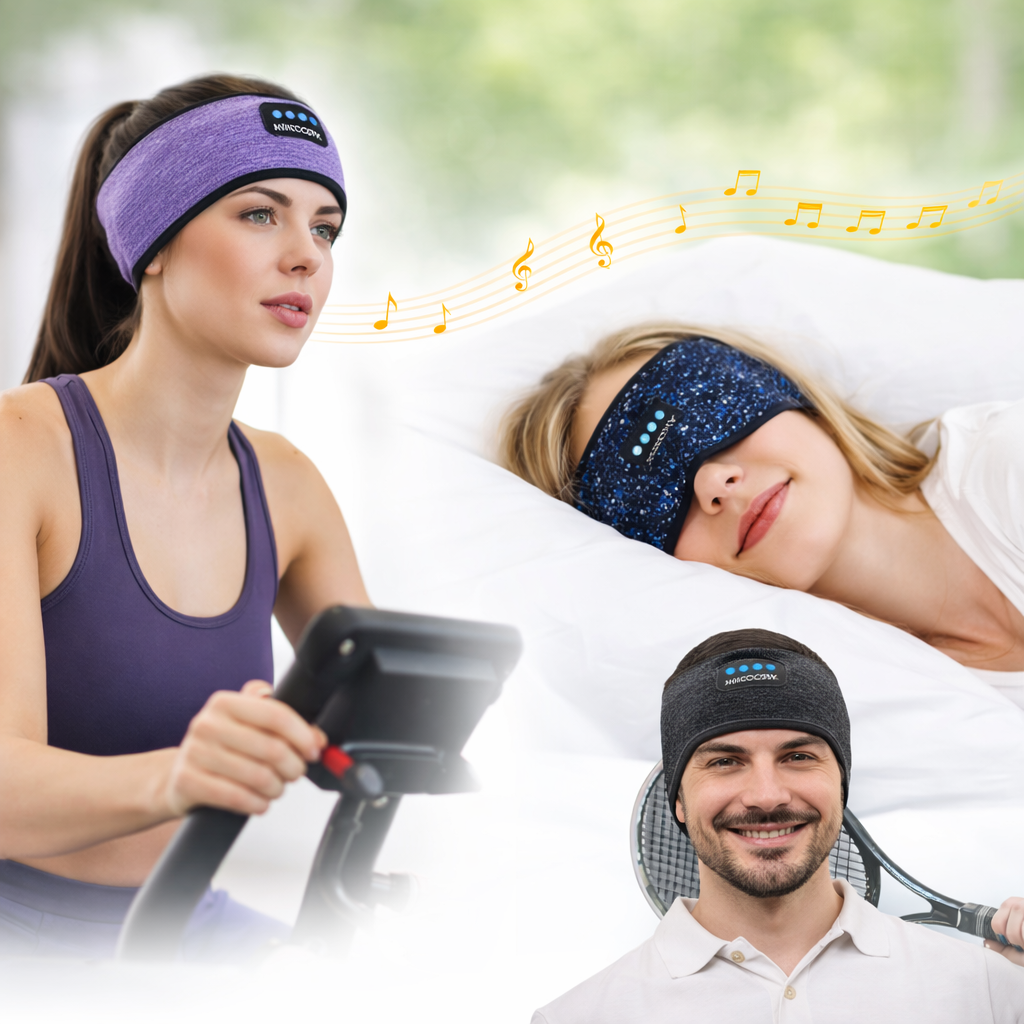
MUSICOZY Sleep Headphones / Headband.
When the mind has softened, sleep becomes less about effort and more about continuity. At this stage, the nervous system is sensitive to small disruptions — a distant sound, shifting pressure, a stray noise that pulls attention back online. Even minor interruptions can reactivate alertness and fragment rest, not because the body isn’t tired, but because the environment hasn’t fully settled.
Supporting sleep here isn’t about adding stimulation or blocking the world out completely. It’s about creating a gentle sensory boundary — enough quiet to stay relaxed, without discomfort or intrusion. When the environment becomes predictable and unobtrusive, the nervous system is more likely to remain at rest once it arrives there.
Sleep headbands address this layer by integrating soft audio and light coverage into something the body can tolerate for extended periods. Unlike traditional earbuds, which can create pressure or discomfort — especially for side sleepers — a fabric-based headband allows sound to remain present without demanding attention. The goal isn’t immersion, but consistency: fewer sudden changes, fewer reasons for the nervous system to re-engage.
This approach works particularly well for people who find that silence isn’t always calming. For some, complete quiet heightens awareness, while gentle, familiar sound helps attention disengage. In those cases, steady audio acts less like stimulation and more like a stabilizer — something the nervous system can rest against rather than react to.
Sleep headbands tend to be most useful when disruption comes from:
• sensitivity to ambient noise
• discomfort with in-ear headphones
• difficulty staying asleep once rest begins
By reducing sensory interruptions, sleep headbands support continuity rather than initiation. They don’t induce rest, but they help protect it — allowing calm to persist once it has been established.
We selected MUSICOZY for its straightforward design and comfort-first approach. The headband integrates flat speakers into a soft, wearable form that avoids pressure points, making it suitable for side sleepers and extended use. Its wireless design and washable construction keep the focus on practicality rather than novelty — fewer parts, fewer distractions, fewer reasons to wake.
As with the other elements in this system, this tool works best when paired with a calmer mental state and a quieter wind-down period. It doesn’t replace those foundations — it supports them by reducing the environmental signals that can undo them.
This kind of support doesn’t create sleep.
It helps keep the conditions steady enough for rest to continue.
As sleep deepens, the body relies less on thought and more on sensation. Muscles release, posture softens, and the nervous system shifts further out of alertness. When physical tension lingers — especially in the feet, legs, or lower back — that transition can remain incomplete, even when the mind is quiet and the environment is calm.
Grounding Mats — Supporting Physical Calm Through Contact
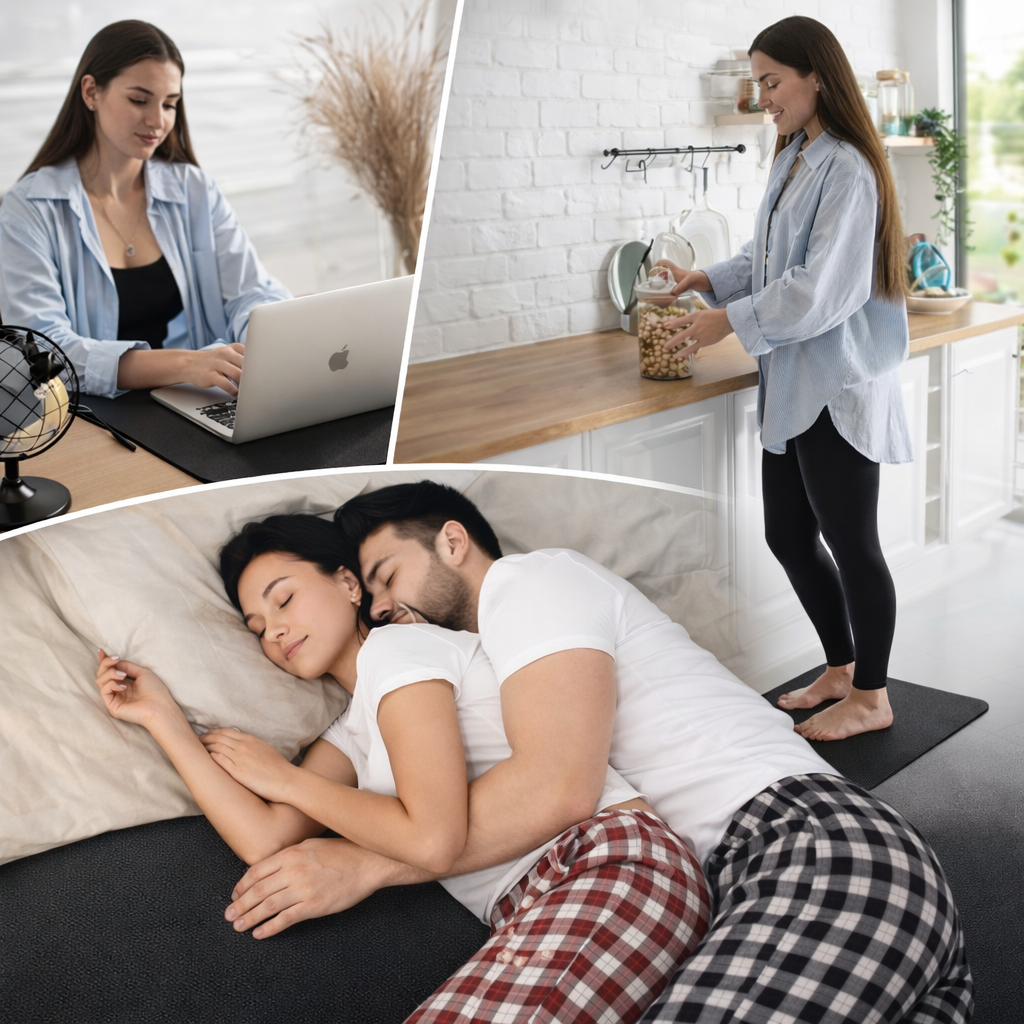
The GAYA Grounding Mat for Feet is designed to support this physical layer of rest through simple, passive contact. Often explored for sleep improvement, muscle relaxation, and stress reduction, grounding mats are used by people who notice that tension shows up physically rather than mentally — as restlessness, heaviness, or stiffness that lingers into the night. The mat can be placed beside the bed, under a desk, or anywhere the feet naturally rest, allowing grounding to become part of daily life without changing routines.
The feet play a central role in how the body regulates itself. Rich in nerve endings and constantly involved in balance and posture, they remain active even during stillness. Providing a calm, consistent point of contact at this level can help the body settle more fully, supporting physical relaxation and a smoother transition into rest. This is also why some people explore grounding for comfort when physical stress shows up as lower-body tension or back discomfort — not as a treatment, but as a supportive condition for relaxation.
Grounding tends to work quietly. You may not feel anything immediately, and that’s normal. When it helps, the effect often appears gradually — as less nighttime restlessness, easier muscle release, or waking with a lighter sense of physical tension. The value lies in its passivity: nothing to track, nothing to force, nothing to “do.”
Grounding tends to be most useful when stress shows up as:
• lingering physical tension at night
• restlessness despite mental calm
• stiffness or heaviness upon waking
We chose GAYA grounding products because they emphasize practical, everyday usability. The grounding mat for feet serves as the primary entry point — compact, durable, and easy to integrate into existing spaces. Its construction includes conductive carbon material and a built-in safety resistor, intended to support safer daily grounding when used as directed. Just as important, the design is honest about expectations: grounding is subtle, and its benefits, if felt, tend to emerge over time rather than all at once.
For those who respond well to this approach, the GAYA bed grounding mat extends the same principle across a larger surface area. Designed to sit under a fitted sheet, it provides consistent overnight contact while remaining thin and unobtrusive. We treat this as a continuation of the same system — not a separate solution — for people who prefer full-night grounding after starting with the feet mat.
As with every element in this article, grounding works best alongside mental calm and a settled environment. It doesn’t replace those foundations — it supports them by addressing the physical signals that can keep the nervous system partially alert, even during rest.
Grounding doesn’t force the body to relax.
It removes one of the quiet physical barriers that can prevent it.
Breathing sits at a unique intersection between conscious and automatic function. It reflects stress immediately, yet it also has the power to calm the nervous system when conditions allow. Shallow breaths, mouth breathing, or restricted airflow — especially at night — can quietly reinforce alertness, even when the mind is calm and the body is still.
Breathing Support — Restoring Rhythm Without Forcing Control
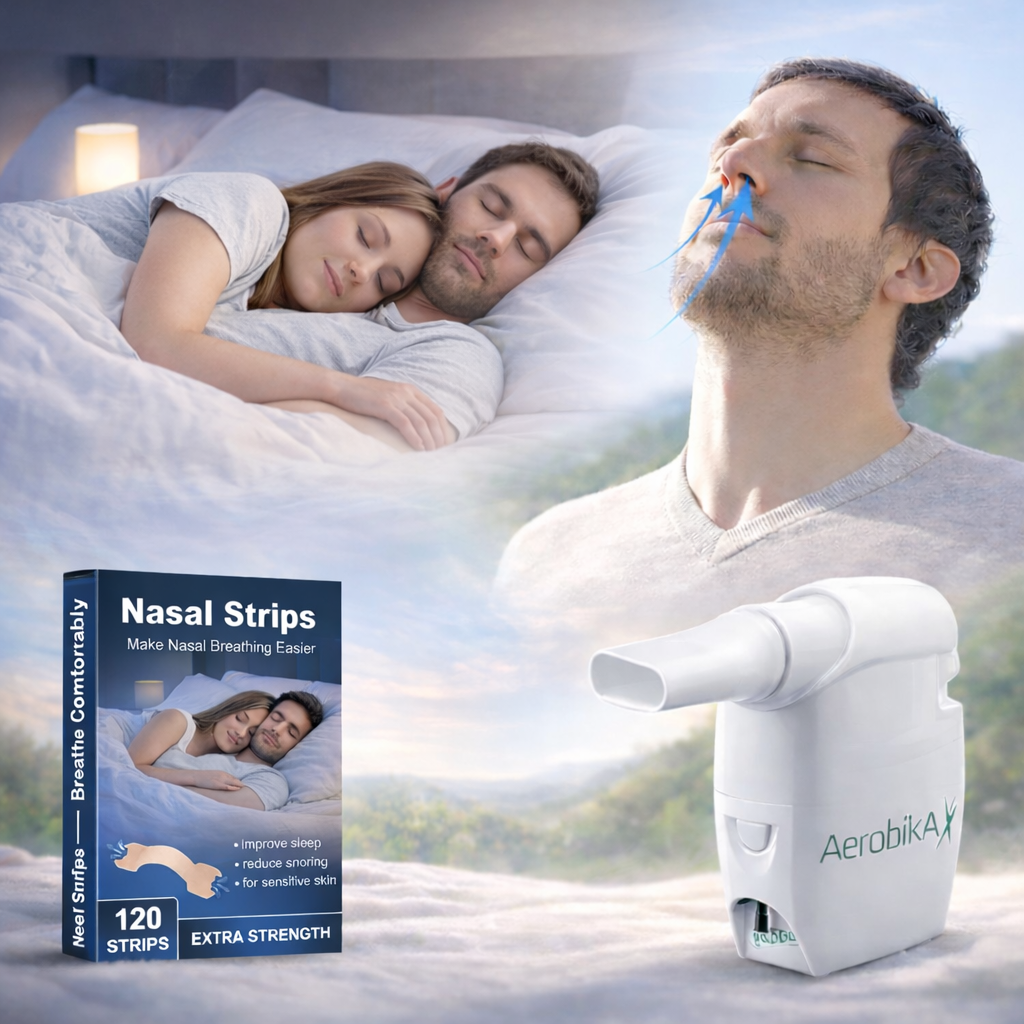
TZLLMFU nasal strips — Aerobika OPEP as a breath-training aid
Improving breathing for rest doesn’t require technique-heavy breathwork or intense focus. Often, it begins by removing resistance — making it easier for air to move and for exhalation to slow naturally. When breathing becomes less effortful, the nervous system follows.
This section brings together two complementary tools that address breathing from different angles: airway openness and breathing mechanics. Used together, they support calmer breathing patterns without demanding attention or control.
Nasal Strips — Improving Airflow Where Breathing Begins
Nasal strips are designed to gently open the nasal passages, making it easier for air to move in and out without effort. By reducing resistance at the nose, they help discourage mouth breathing and support quieter, steadier respiration — particularly during sleep.
The TZLLMFU nasal strips were chosen for their simplicity and consistency. They’re non-invasive, easy to apply, and designed for extended use without irritation. Many people explore nasal strips for snoring reduction, nasal congestion, or simply to make breathing feel less restricted at night. Their value lies in how little they ask of the user: once applied, they do their job quietly in the background.
For sleep, this matters because nasal breathing naturally supports slower, more regulated respiration. When airflow improves at the entry point, the entire breathing pattern can soften — helping the nervous system remain in a calmer state once rest begins.
Breathing Mechanics — Training Calmer Exhalation
While nasal strips address airflow, breathing mechanics influence rhythm. Stress often shortens the exhale, keeping the body in a state of readiness even during rest. Supporting a fuller, slower exhalation can signal safety to the nervous system, allowing tension to release more completely.
Aerobika OPEP device addresses this layer through gentle resistance during exhalation. Originally developed for respiratory therapy, it’s a drug-free, mechanical tool that encourages controlled breathing without requiring instruction-heavy techniques. Used briefly during the day or early evening, it helps reinforce steadier breathing patterns that often carry over into rest.
We included Aerobika not as a medical solution, but as a breath-training aid — a way to practice calmer breathing without apps, screens, or performance pressure. Its design allows breathing to remain natural while subtly guiding the exhale, which is the phase most closely tied to nervous system downregulation.
Breathing support tends to be most useful when stress shows up as:
• snoring or mouth breathing during sleep
• shallow or irregular breathing patterns
• feeling tired but physiologically “keyed up”
These tools work best as a pair, not competitors. Nasal strips improve how air enters the body. The breathing device supports how air leaves it. Together, they reduce resistance and restore rhythm — allowing breath to settle without conscious effort.
This is also where breathwork fits naturally. Rather than formal exercises, the goal here is exposure and repetition: creating conditions where calmer breathing happens on its own. When airflow is open and exhalation slows, the nervous system receives a consistent signal that it’s safe to let go.
As with every element in this article, breathing support doesn’t create rest. It removes interference, allowing rest to unfold naturally.
Breathing doesn’t need to be controlled to calm the body.
It needs to be allowed to move freely and fully.
After airflow is opened and breathing rhythm begins to settle, there’s often a natural curiosity that follows: why does this matter so much? At this point, adding more tools isn’t always necessary. Sometimes the most useful next step is understanding — not to control breathing, but to recognize how deeply it shapes stress, sleep, and the nervous system in everyday life.
Breath: The New Science of a Lost Art — Understanding the System Beneath the Habit
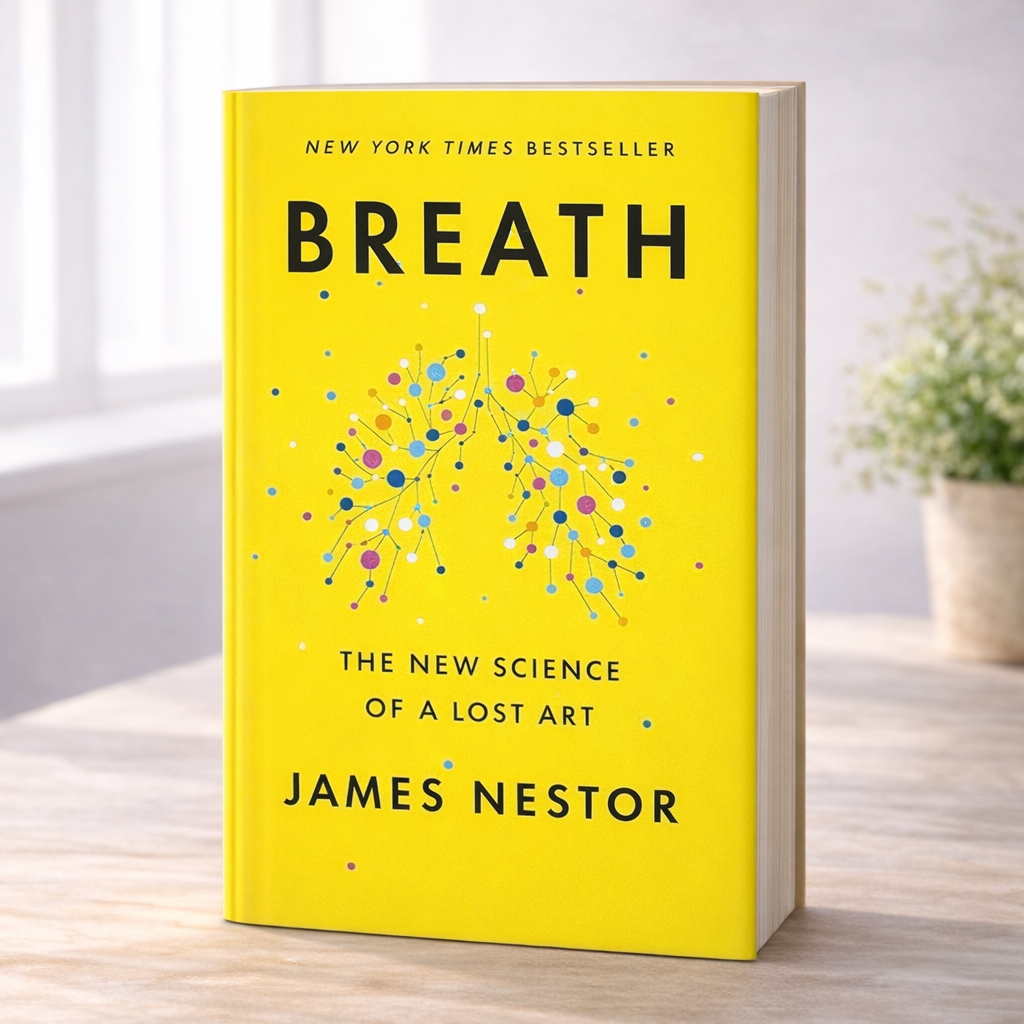
The New Science of a Lost Art by James Nestor
Breathing is the one function we perform more than any other, yet rarely examine. It operates quietly in the background, adjusting to posture, emotion, environment, and stress without conscious input. Because of this, it’s easy to underestimate how strongly breathing patterns influence sleep, tension, and overall regulation.
Breath doesn’t present breathing as a technique to master or a ritual to perform. Instead, it reframes it as a biological system shaped by evolution, culture, and modern living — one that has drifted away from what the body handles best.
James Nestor approaches the subject as a journalist rather than a guru. His work traces how small, often unconscious changes in breathing — mouth breathing, shallow inhales, shortened exhales — have become normalized, and how these patterns quietly reinforce stress, poor sleep, and physical strain. What emerges isn’t a single method, but a broader understanding: breathing affects far more than oxygen intake. It influences nervous system tone, muscle tension, sleep continuity, and even how safe the body feels at rest.
What makes this book especially relevant in the context of sleep and stress is its restraint. While it explores ancient practices and modern research alike, the central takeaway isn’t to “do more,” but to remove interference. Many of the most meaningful improvements described come from allowing breath to return to a slower, more spacious rhythm — something that often happens naturally when resistance is reduced.
The book also clarifies why the tools discussed earlier in this article work when they do. Improving nasal airflow, slowing exhalation, and creating conditions for steadier breathing aren’t isolated tricks — they’re expressions of the same underlying principle: when breathing becomes easier, the nervous system follows.
Breath is especially valuable if you’re curious about:
• why breathing patterns affect sleep and stress so strongly
• how modern habits quietly reshape respiration
• why small changes often matter more than intense techniques
We included this book not as a prescription, but as context. It helps connect the dots between biology, environment, and habit — offering language for experiences many people already recognize but haven’t fully understood.
In that sense, Breath isn’t the conclusion of this system. It’s a lens that makes the rest of it clearer.
Breathing doesn’t need to be perfected.
It needs space to return to what the body already knows.
Sleep doesn’t improve when it’s chased. It improves when the signals asking the body to stay alert begin to quiet — one layer at a time. Mental calm, a settled environment, gentle physical support, easier breathing. Tonight, let rest come naturally. Good night.
“Sleep isn’t something to solve — it’s something the body remembers when given the opportunity.”

—Vladimir V.R.