
At EverVibe, We decided include this list because longevity is not sustained by the body alone. Long-term health depends on emotional regulation, nervous system stability, and the ability to recover from prolonged stress. Trauma, instability, and chronic emotional strain place a measurable load on the body — affecting sleep, inflammation, hormones, decision-making, and resilience over time. These books were chosen not to revisit pain, but to reduce its ongoing physiological cost. By helping people regain internal safety, emotional control, and clarity, they support the same goal as nutrition, movement, and smart living tools: preserving energy, reducing wear on the system, and creating a life that can be sustained without constant strain.
For many people, emotional control isn’t missing — it was interrupted.Some wounds don’t announce themselves loudly. They show up as tension, emotional swings, difficulty trusting others, or a constant sense of alertness that never fully turns off. Rebuilding after abuse or prolonged instability isn’t about becoming stronger overnight. It’s about understanding why control was lost in the first place — and how it can return without force or self-judgment. The books in this list are not about self-improvement in the traditional sense — they are about understanding how survival reshapes the mind and body, and how stability can be rebuilt without denying what came before.
Brain, Mind, and Body in the Healing of Trauma
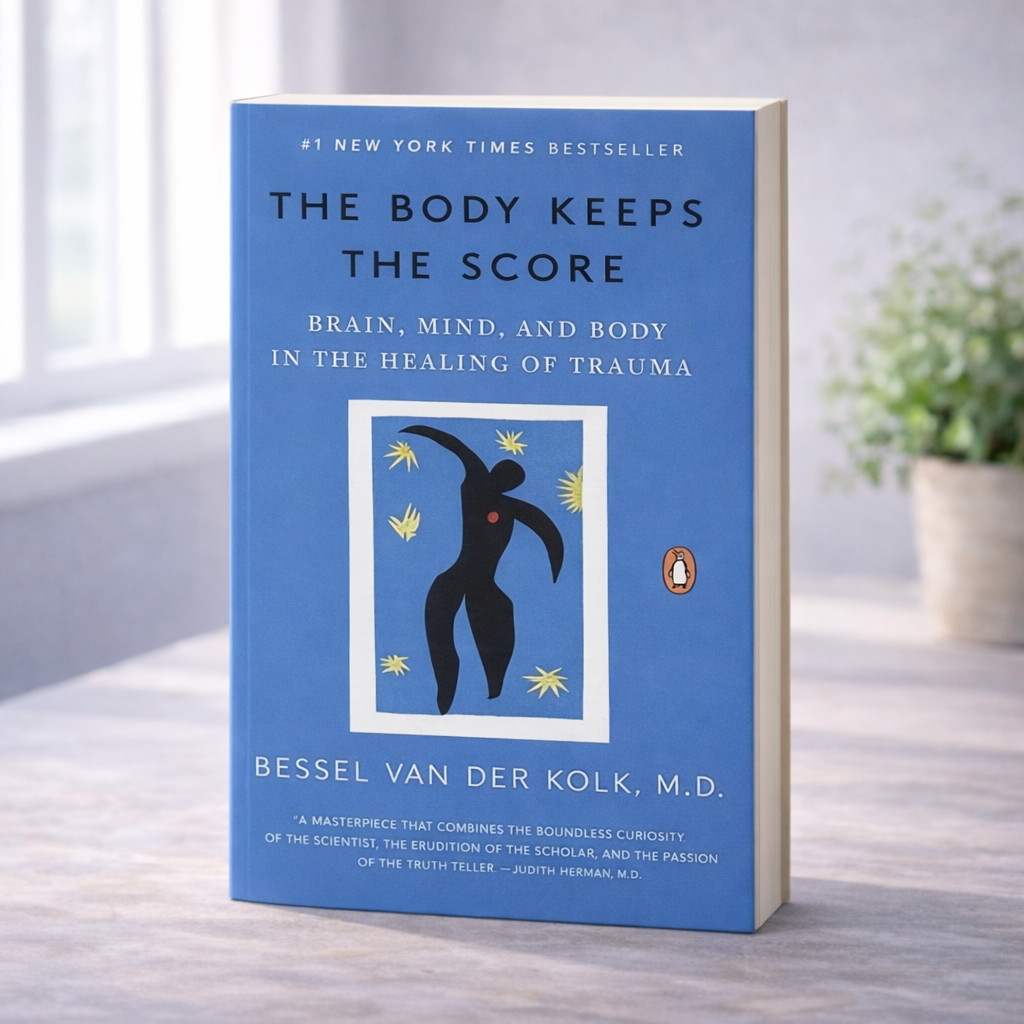
“Being able to feel safe with other people is probably the single most important aspect of mental health.” by Bessel van der Kolk
First published in 2014, The Body Keeps the Score has become one of the most influential works on trauma precisely because it avoids simplification. Its longevity comes from integrating neuroscience, psychology, and clinical observation without reducing trauma to either pathology or narrative alone. In a field often divided between talk-based insight and symptom management, the book bridged the gap — offering a framework that respects both the mind’s understanding and the body’s memory. Its impact lies not in prescriptions, but in reframing healing as a process of restoring internal safety rather than enforcing control.
Once awareness forms, responsibility is accepted, and intention becomes clear, a deeper obstacle often remains.
The body does not update on command.
People can understand their history, name their patterns, and consciously choose change — yet still find themselves reacting before thought, shutting down under pressure, or feeling unsafe in situations that pose no real threat. Progress stalls not because insight is missing, but because the nervous system is still operating under older rules.
The Body Keeps the Score addresses this layer directly.
Bessel van der Kolk’s work shifts the focus away from memory and willpower, and toward physiology — how trauma reshapes the brain and body to prioritize survival over reflection.
The book reframes emotional dysregulation as a biological adaptation. When danger, neglect, or instability persists, the nervous system learns to stay alert. Over time, this readiness becomes automatic. Calm reasoning loses access. Emotions surge or disappear without warning. Control feels unreliable, not due to weakness, but because the body is responding faster than conscious thought can intervene.
What this book adds to the sequence is orientation.
It explains why logic alone cannot resolve trauma, and why telling oneself to “move on” often backfires. Safety must be reintroduced at the level where threat was learned — through bodily awareness, regulation, and gradual reconnection. Healing, in this framework, is not about revisiting pain endlessly, but about restoring choice to systems that learned under pressure.
The result isn’t emotional indulgence.
It’s stability.
The Body Keeps the Score reframes the entire recovery process. It does not contradict responsibility or agency — it contextualizes them. Insight becomes incomplete without regulation. Intention becomes fragile without safety. And self-compassion becomes rational once survival is understood as function, not failure.
Oprah Winfrey Has discussed the book publicly and cited its role in reframing trauma and healing along with Leading trauma clinicians worldwide.
Understanding how trauma is stored in the body creates clarity, but clarity alone doesn’t resolve the daily emotional aftershocks. Once awareness sets in, the real challenge begins: learning how to live with those reactions without being consumed by them.
Complex PTSD: From Surviving to Thriving
A guide and map for recovering from childhood trauma
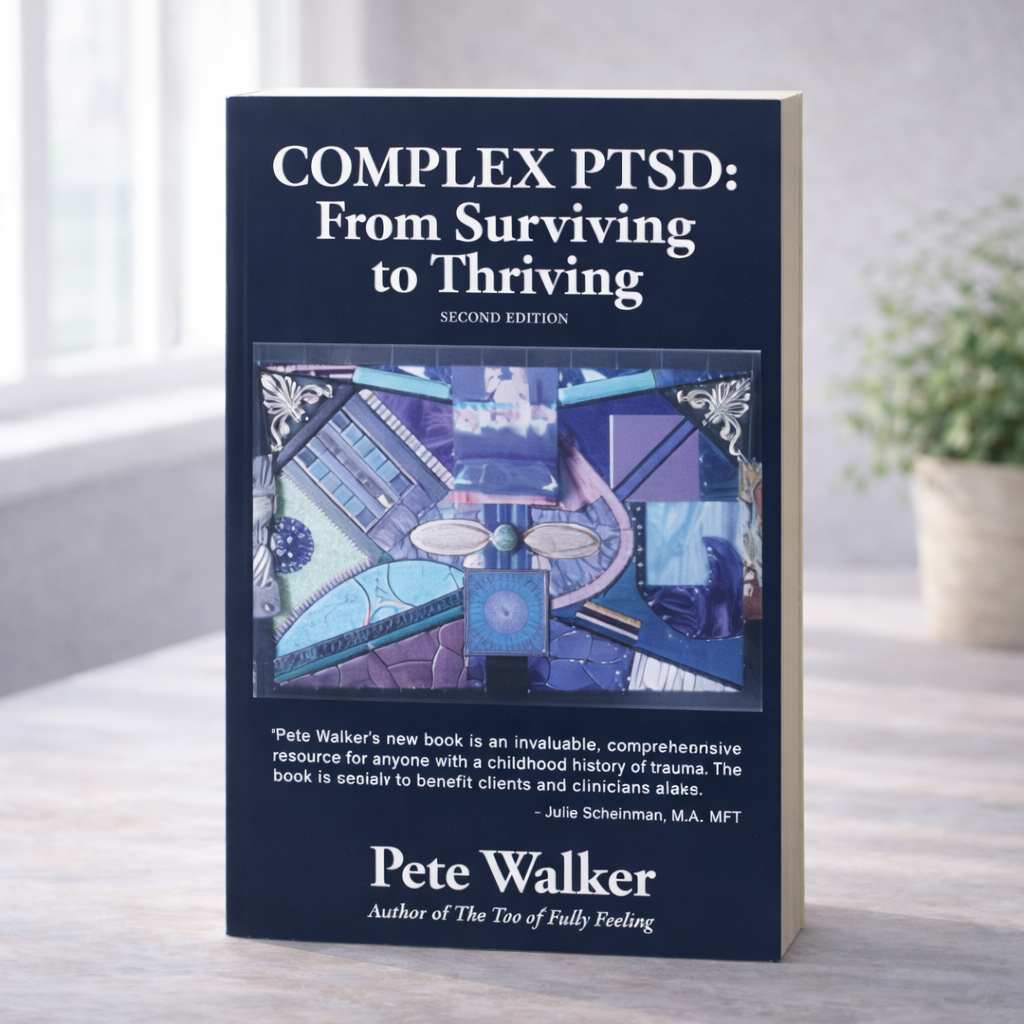
“Healing is not about erasing the past; it’s about reclaiming the present.” by Pete Walker
First published in 2013, Complex PTSD: From Surviving to Thriving became a cornerstone text for understanding developmental and relational trauma. Its influence comes from addressing experiences that traditional PTSD frameworks often overlook — emotional neglect, long-term abuse, and chronic instability. The book’s endurance lies in its compassion and practicality, offering language and tools that resonate deeply with those who never felt “traumatized enough” to deserve help, yet struggled daily with its effects.
Once the body is understood and safety becomes a priority, another constraint emerges.
Trauma is rarely isolated.
For many people, harm was not a single incident but a long environment — repeated exposure to fear, unpredictability, emotional neglect, or abuse that shaped development over time. In these cases, reactions are not episodic. They are woven into identity, relationships, and self-perception.
Complex PTSD: From Surviving to Thriving addresses this layer directly.
Pete Walker’s work focuses on what happens when trauma becomes a chronic condition rather than a past event.
The book introduces the concept of emotional flashbacks — sudden shifts into fear, shame, or collapse without a clear memory attached. These moments can feel confusing and disproportionate, often leading people to believe something is fundamentally wrong with them. Walker reframes these experiences not as pathology, but as the nervous system revisiting unfinished survival responses.
What this book adds to the sequence is specificity.
It gives names to internal states that often go unrecognized: the inner critic, hypervigilance, emotional abandonment, and the constant pressure to perform or disappear. By naming these patterns, the book restores orientation. Reactions that once felt chaotic begin to follow understandable logic.
Importantly, the book does not frame healing as domination over emotion. Instead, it emphasizes gentleness, pacing, and self-protection. Progress is measured not by intensity, but by reduced reactivity, increased choice, and the gradual return of emotional range. Control, in this context, is not force — it is safety accumulated over time.
The result isn’t perfection.
It’s regulation.
Complex PTSD: From Surviving to Thriving bridges understanding and practice.
It takes the physiological insight of trauma and translates it into daily life — relationships, boundaries, self-talk, and recovery from emotional overwhelm. Survival stops being an identity and becomes a phase that can be left behind.
Trauma-informed therapists worldwide Widely used in clinical and self-help trauma recovery settings.
As emotional patterns become clearer, many people begin to see that their reactions were shaped long before adulthood. This realization often leads to a difficult but necessary question: where did these patterns begin?
Adult Children of Emotionally Immature Parents
How to Heal from Distant, Rejecting, or Self-Involved Parents
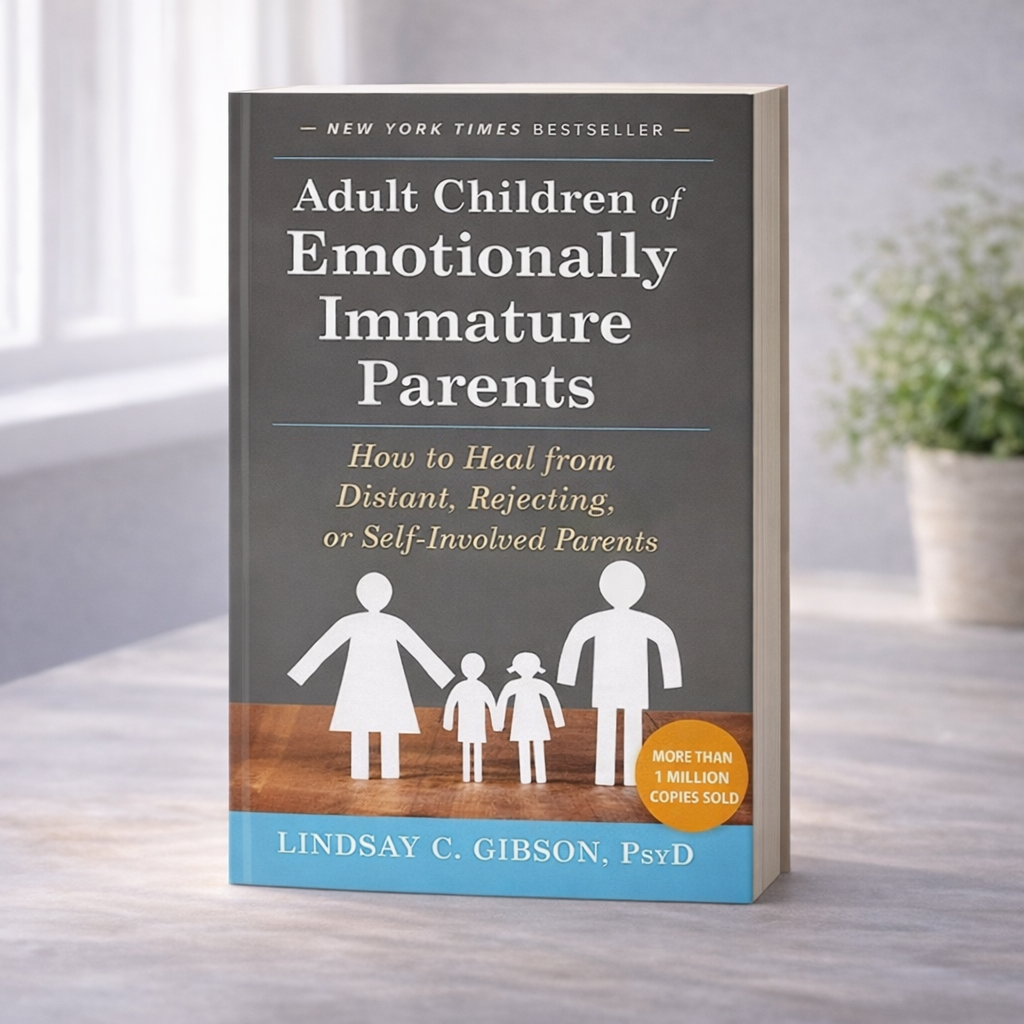
“Emotional independence means trusting your own perceptions.” by Lindsay C. Gibson
First published in 2015, Adult Children of Emotionally Immature Parents became a foundational text for understanding relational trauma that does not fit traditional abuse frameworks. Its longevity comes from precision — giving language to experiences many people sensed but could not articulate. By normalizing emotional independence rather than reconciliation, the book offered relief to readers who had spent years blaming themselves for unmet needs. Its influence continues because it validates reality without demanding conflict or idealized closure.
Once trauma is understood as both physiological and long-term, another constraint becomes visible.
Not all harm is dramatic.
For many people, the most destabilizing experiences came from environments that looked functional on the surface, yet lacked emotional consistency, attunement, or safety. Needs were minimized. Feelings were dismissed. Responsibility was reversed. Over time, this teaches a child to adapt by suppressing needs, managing others’ emotions, or doubting their own perceptions.
Adult Children of Emotionally Immature Parents addresses this layer directly.
Lindsay Gibson’s work focuses on the quieter forms of harm that shape identity, boundaries, and self-trust over a lifetime.
The book introduces emotional immaturity not as cruelty, but as limitation. Parents may be reactive, self-focused, or unable to tolerate emotion — leaving children to grow up without reliable emotional grounding. The long-term result is often confusion rather than anger: difficulty identifying one’s needs, chronic guilt, people-pleasing, or a persistent sense of emotional loneliness even in relationships.
What this book adds to the sequence is differentiation.
It helps separate responsibility from attachment. Readers learn to observe behavior clearly, recognize patterns without dramatization, and disengage from dynamics that cannot change. Healing here is not about confrontation or repair fantasies — it is about emotional independence. Learning to stop seeking validation where it was never available.
The result isn’t detachment.
It’s clarity.
Adult Children of Emotionally Immature Parents restores internal authority.
Once the nervous system stabilizes and survival responses soften, this book helps rebuild trust in one’s own perceptions. It teaches how to relate without over-functioning, how to set boundaries without guilt, and how to protect emotional energy without withdrawal.
Psychology Today Commonly recommended for adults processing family-of-origin issues.
Once the past is seen more clearly, the focus naturally shifts forward. The question is no longer only why emotions arise, but how to relate to them without suppression, avoidance, or loss of control.
Get Unstuck, Embrace Change, and Thrive in Work and Life
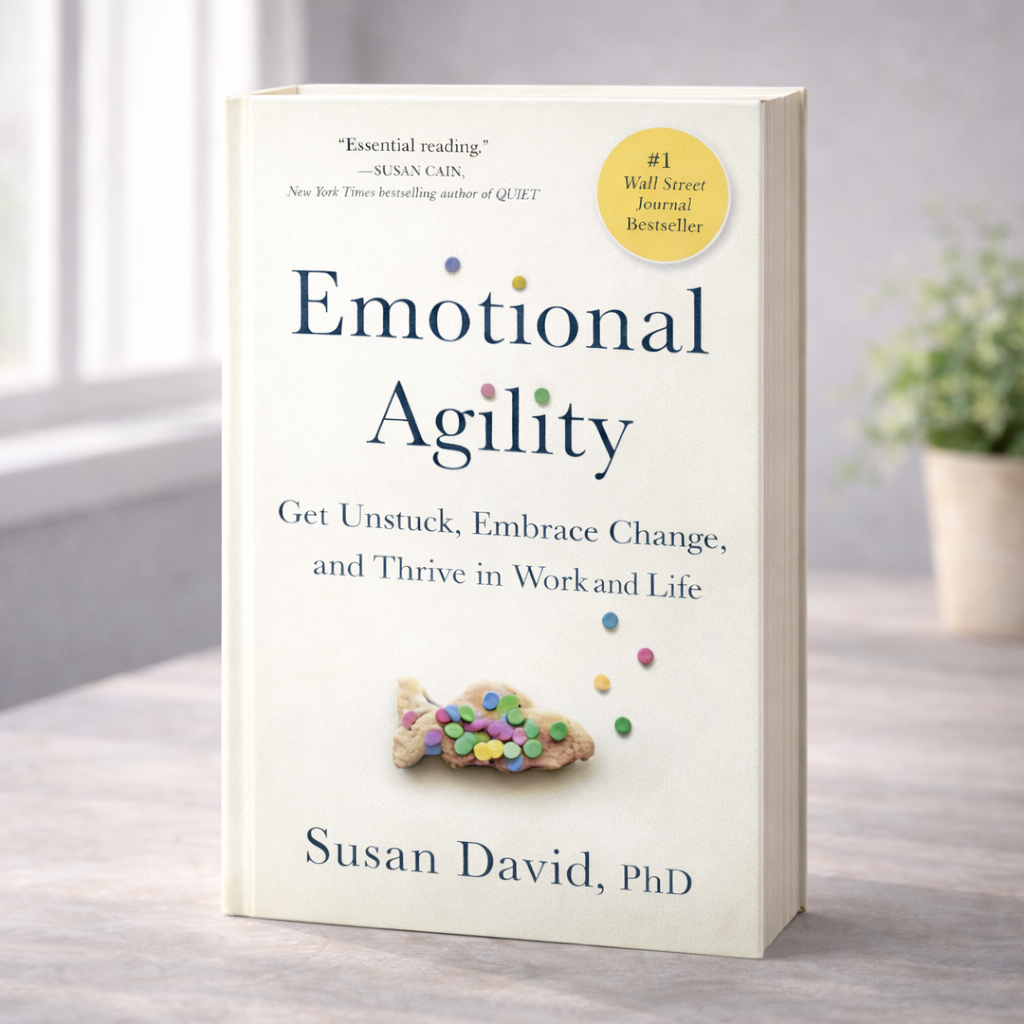
“Discomfort is the price of admission to a meaningful life.” by Susan David
First published in 2016, Emotional Agility gained influence by offering an alternative to both emotional suppression and indulgence. Rooted in psychology and behavioral science, the book resonated across leadership, mental health, and personal development fields for its practical realism. Its longevity comes from respecting emotion without surrendering to it — a balance that remains relevant in high-stress modern life.
Once trauma is understood, patterns are named, and responsibility is placed where it belongs, another challenge appears.
Emotion does not disappear with insight.
Even after clarity is restored, feelings still arise — fear, anger, grief, hesitation. The difference now is not whether emotions exist, but how they are handled. Without a framework, people often swing between suppression and overwhelm, mistaking emotional control for emotional avoidance.
Emotional Agility addresses this layer directly.
Susan David’s work focuses on the space between feeling and action — where choice becomes possible.
The book reframes emotions not as obstacles to overcome, but as information to be interpreted. Instead of asking people to eliminate discomfort, it teaches how to stay present with difficult feelings without being defined by them. This distinction is critical for anyone recovering from instability, where emotions once signaled danger and demanded immediate reaction.
What this book adds to the sequence is flexibility.
It introduces a way to acknowledge emotions honestly while maintaining direction and values. Emotional agility allows people to respond instead of react, to feel without collapsing, and to move forward without forcing positivity. Control here is not rigidity — it is adaptability under pressure.
The result isn’t emotional neutrality.
It’s agency.
Emotional Agility rebuilds trust in internal experience.
After trauma, emotions often feel unreliable or threatening. This book restores confidence by teaching that emotions can be engaged thoughtfully rather than feared or silenced. Over time, this skill reduces internal friction and conserves energy — essential for long-term stability and health.
Harvard Medical School & Harvard Business School Have featured David’s work in discussions on emotional regulation and leadership.
As emotional regulation improves, a deeper question often emerges. Beyond coping and control, many people begin to wonder how suffering fits into the larger shape of their life — and whether meaning can exist alongside what was lost.
Conversations on Trauma, Resilience, and Healing
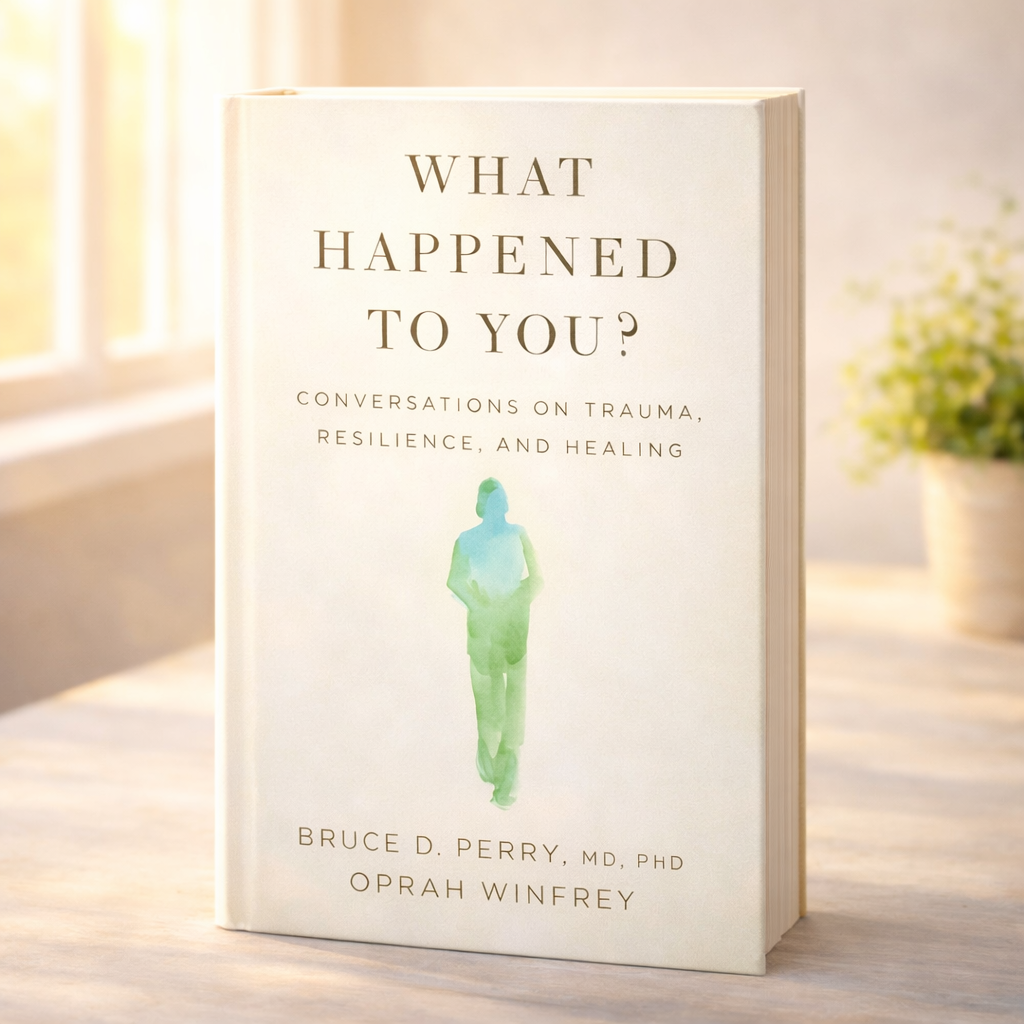
“People are not born broken. They are shaped.” by Bruce Perry & Oprah Winfrey
Published in 2021, What Happened to You? gained wide recognition for making trauma science accessible without diluting its seriousness. Its impact lies in reframing human behavior through development rather than diagnosis. By bringing together neuroscience, psychology, and lived narrative, the book has influenced educators, clinicians, and individuals seeking to understand themselves without stigma. Its longevity comes from clarity — offering a framework that explains behavior while preserving accountability and dignity.
Once the body is understood, long-term trauma is named, relational patterns are clarified, and emotional agency begins to return, a final barrier often remains.
Self-judgment.
Even with insight, many people still interpret their reactions as personal failure. They ask why they struggle with consistency, trust, or emotional regulation — assuming something is broken rather than learned. This quiet blame can undo progress, keeping recovery framed as correction instead of understanding.
What Happened to You? addresses this final layer directly.
Through a dialogue between neuroscience and lived experience, Bruce Perry reframes behavior as adaptation. The central shift is simple but profound: replacing the question “What’s wrong with me?” with “What happened to me?”
The book explains how early experiences shape the developing brain, nervous system, and stress responses. When safety, consistency, or attunement are missing in childhood, the brain organizes itself around survival. These patterns persist into adulthood not because of choice, but because they were once effective. Seen through this lens, behavior becomes intelligible rather than shameful.
What this book adds to the sequence is integration.
It ties together physiology, emotion, and behavior into a single, compassionate framework. Recovery is no longer about fixing traits or overriding reactions. It becomes about updating systems that formed under different conditions. Understanding replaces blame. Curiosity replaces judgment. And healing becomes a process of alignment rather than resistance.
The result isn’t absolution.
It’s coherence.
What Happened to You? completes the map.
It does not introduce new techniques or demands. Instead, it stabilizes everything that came before. Safety enables regulation. Regulation enables choice. Choice enables growth — but compassion sustains it. Without that final shift, progress remains fragile.
Oprah Winfrey Co-author and advocate for trauma-informed understanding along with Psychology and neuroscience communities
Cite the book for its accessible explanation of brain development and stress.
Some people learned to survive in silence, to grow up too fast, to carry fear, responsibility, or grief long before they had the capacity to understand it. If parts of your life felt chaotic, unsafe, or overwhelming, that does not mean you failed — it means your system adapted to endure what it had to. This guide exists because survival deserves context, not judgment. These books were chosen to offer understanding where confusion once lived, stability where control was lost, and language where there was none. Healing does not require rewriting the past or minimizing what happened. It begins by recognizing that nothing about your response was random — and that rebuilding, at any pace, is not only possible, but deserved.
No one is excluded from that path & No one should be left behind.
“I’m not rebuilding to prove anything. I’m rebuilding because I deserve a life where I choose the direction, not the seat I was given.”

— Vladimir V.R.