
Most people don’t struggle with money because they lack effort or intelligence. They struggle because their relationship with money was shaped long before they ever had the chance to choose it. Beliefs were inherited, behaviors were normalized, emotions were left unmanaged, and systems were never designed. Over time, this creates motion without direction—years of work that don’t translate into stability. The books in this list are not shortcuts or promises of wealth. They are turning points. Each one addresses a different layer of how money actually works in real life: how we think about it, how we react to it, how we behave around it, and how we build structures that either support us or quietly hold us back.
Rich Dad Poor Dad
What the Rich Teach Their Kids About Money That the Poor and Middle Class Do Not!
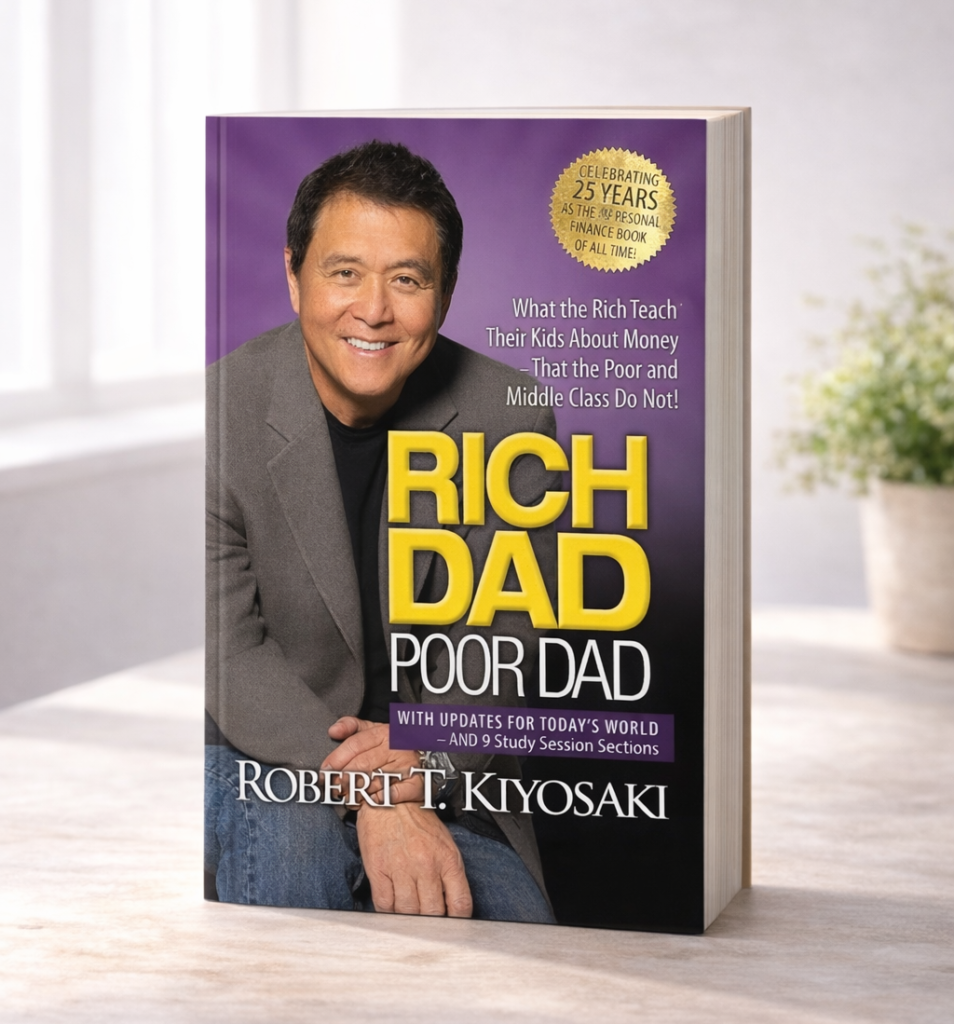
“Financial freedom is available to those who learn about it and work for it.” by Robert T. Kiyosaki.
Rich Dad Poor Dad still ranks as the #1 personal finance book of all time, maintaining that position for over 25 years since its release on April 8, 1997.
“Why our money story starts before we choose it.”
At its core, the book explores how our understanding of money is shaped long before we ever earn it—through the beliefs, habits, and attitudes of those we grow up around. Financial limitation, much like poverty itself, can be passed down through generations—not only through circumstances, but through quietly enforced beliefs about what is possible, acceptable, or “safe.”
These ideas are rarely challenged. They’re reinforced through subtle peer pressure, social expectations, and unspoken rules that keep people operating within the same loop of limitation—often without realizing it.
While the book is widely known for its financial perspective, its deeper message goes beyond money. It speaks to character—the mindset, responsibility, and internal shift required to build real financial independence. Through his own life experiences, Robert T. Kiyosaki explains how changing the way he perceived money fundamentally altered his ability to build wealth.
Over the years, both his personal success and the success of those who applied his ideas have reinforced a simple but uncomfortable truth: financial stability doesn’t start with tactics—it starts with how we think, who we believe we are, and what we believe we’re capable of.
For more than two decades, this book has continued to change lives, and it likely will as long as modern financial systems exist. But perhaps its most important message is this:
“Change doesn’t begin with the economy, employers, or opportunity.
It begins with us.”
Robert Kiyosaki points out that resistance to financial growth rarely comes from strangers. It comes from parents, peers, and social circles who—often unintentionally—discourage ambition or unconventional paths in order to preserve existing comfort.
By confronting the belief that we are incapable—or “not meant”—to achieve financial freedom, the book exposes the real obstacle: inaction rooted in inherited assumptions. Once those assumptions are questioned, what remains is choice. And responsibility.
After inherited beliefs are exposed, a new problem appears.
Awareness doesn’t automatically lead to action. Recognizing that many limits were passed down through family and peers raises an uncomfortable question: What happens once you see it? At that point, continuation is no longer accidental. It becomes a choice. This is where responsibility enters the conversation.
That shift—from unconscious inheritance to conscious direction—is where our next title naturally follows.
“Think and Grow Rich. is foundational influence on mindset, decision-making, and personal standards.”—Tony Robbins.
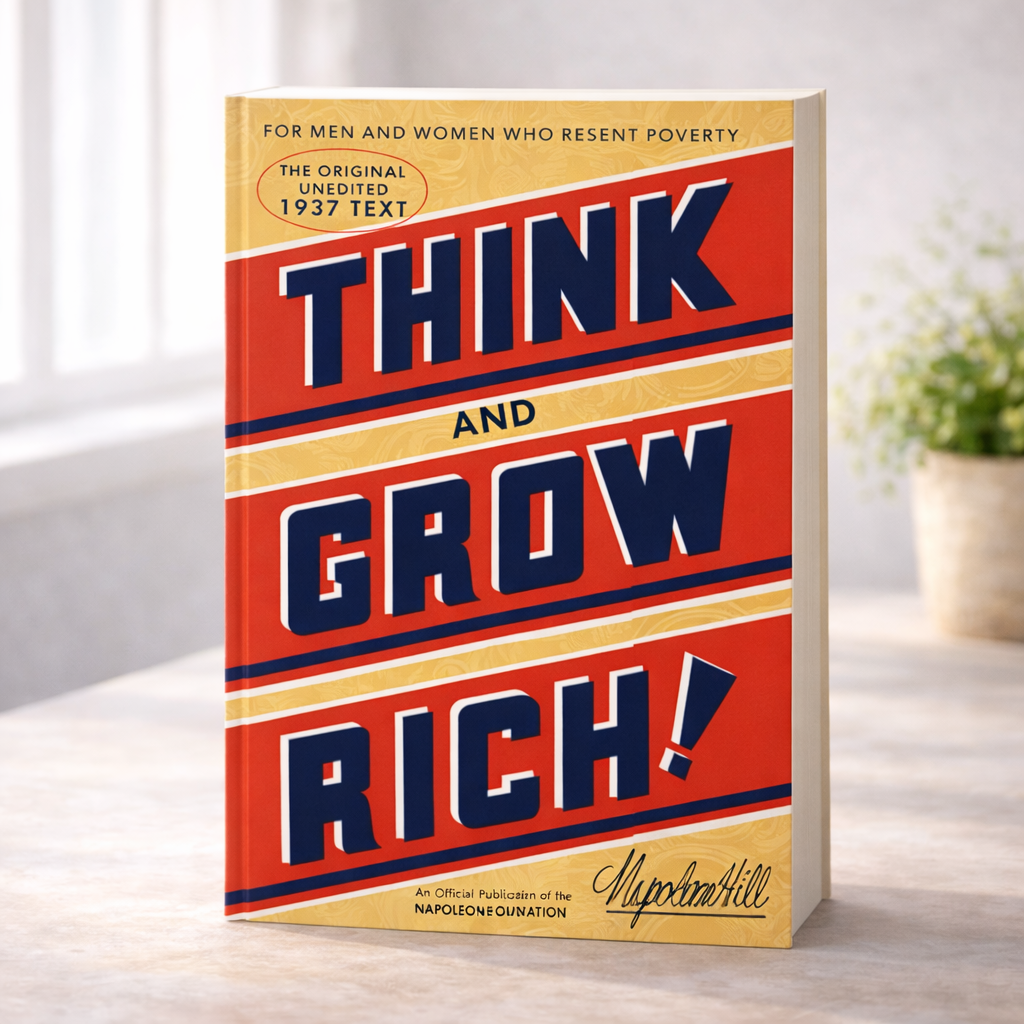
“Before success comes in any person’s life, they are sure to meet with much temporary defeat and, perhaps, some failure.” by Napoleon Hill
Originally published in March 1937, Think and Grow Rich has sold over 80 million copies worldwide, quietly outlasting generations of financial systems, trends, and economic cycles. Its longevity isn’t the result of tactics or timing, but of something more durable: an examination of how belief, direction, and responsibility shape outcomes long before money appears. Few books written nearly a century ago remain this widely read—not because they are nostalgic, but because they remain accurate.
Once inherited beliefs around money are exposed, something uncomfortable happens.
Awareness removes excuses—but it also removes innocence.
After Rich Dad Poor Dad makes it clear that many financial limits are learned rather than chosen, the responsibility shifts. If those beliefs are no longer invisible, continuing to live by them becomes a decision. This is where Think and Grow Rich enters the sequence naturally.
Think and Grow Rich is not concerned with money mechanics. It is concerned with direction. Napoleon Hill focuses on the moment where responsibility moves inward—where progress or stagnation is no longer attributed to circumstance, upbringing, or timing.
Hill observed that people often mistake motion for intention. They work, they try, they stay busy—but without a clearly chosen aim, effort diffuses. What he identifies is not lack of opportunity, but lack of internal alignment. Decisions are made reactively, shaped by fear, doubt, and the quiet influence of other people’s expectations.
Much like Kiyosaki, Napoleon Hill points to early conditioning—but he takes the argument further. Once belief is recognized as the constraint, clarity becomes the requirement. Not vague ambition, but deliberate direction. Without it, even favorable conditions fail to produce results.
The book also challenges another inherited habit: waiting. Waiting for confidence, certainty, or permission. Hill treats hesitation as a form of avoidance—one that feels reasonable, but quietly preserves the status quo. Inaction, in this sense, is not neutral. It is a choice reinforced by familiar thinking.
This is where the shift becomes irreversible.
Once responsibility is accepted internally, progress is no longer blocked by belief alone.
What Think and Grow Rich adds to the progression is internal authority. The understanding that financial outcomes are downstream from identity, standards, and sustained intention. Not emotion in the moment—but commitment over time.
Clarity of intention is powerful, but intention alone doesn’t guarantee outcomes. Once responsibility is claimed internally, the next illusion tends to surface: the belief that wealth is loud, visible, or obvious. Many people expect results to look a certain way—and dismiss progress when it doesn’t. This is where behavior matters more than image.
The next title grounds the conversation by replacing aspiration with evidence.
After responsibility is claimed internally, another illusion quietly collapses—the belief that wealth is visible.

“Wealth is the result of a lifestyle of hard work, perseverance, planning, and, most of all, self-discipline.” by William D. Danko
Originally published in 1996, The Millionaire Next Door has remained a foundational reference in personal finance for decades, not because it inspires ambition, but because it corrects illusion. Its relevance comes from evidence rather than opinion—grounded in real data about how wealth is actually built, preserved, and lived with over time. While markets, lifestyles, and social norms have evolved, the behaviors it documents have remained remarkably consistent. Few finance books endure this long by challenging appearances instead of chasing trends, and fewer still do so by proving that lasting financial stability is usually quiet, disciplined, and deliberately unremarkable.
Many people expect financial success to announce itself through lifestyle, possessions, or status. When it doesn’t, they assume they’re behind. When others appear ahead, they assume they’re failing. This misunderstanding keeps people chasing appearances instead of outcomes.
The Millionaire Next Door disrupts that pattern by replacing assumption with evidence.
Based on years of research and real financial data, Thomas J. Stanley and William D. Danko reveal something deeply counterintuitive: most wealthy individuals don’t look wealthy. They live below their means, avoid unnecessary display, and prioritize long-term stability over social validation.
What this book contributes to the progression is grounding.
It shifts the focus away from ambition and toward behavior.
The authors show that wealth is less about what people earn and more about how they manage what they keep. Consumption, they argue, is often mistaken for success. In reality, it is frequently the reason success never compounds.
This perspective reframes progress. Quiet consistency begins to matter more than intensity. Discipline matters more than image. And the gap between appearance and reality becomes impossible to ignore.
The book doesn’t criticize ambition.
It exposes impatience.
The Millionaire Next Door serves as a corrective. After belief is questioned and responsibility is claimed, it teaches restraint—how not to sabotage progress by trying to look successful before becoming stable.
Warren Buffett while not directly endorsing the book, Buffett’s lifestyle and principles closely mirror its findings and are frequently cited alongside its conclusions.
Seeing how wealth is actually built challenges assumptions—but it doesn’t remove emotion. Even when people understand long-term behavior, they still struggle with impatience, fear, and comparison. Knowing what works doesn’t automatically quiet the internal pressure to act too soon or copy others. This is where psychology becomes unavoidable.
The Psychology of Money explains why rational plans fail under emotional strain—and why stability requires patience as much as knowledge.
Timeless lessons on wealth, greed, and happiness.
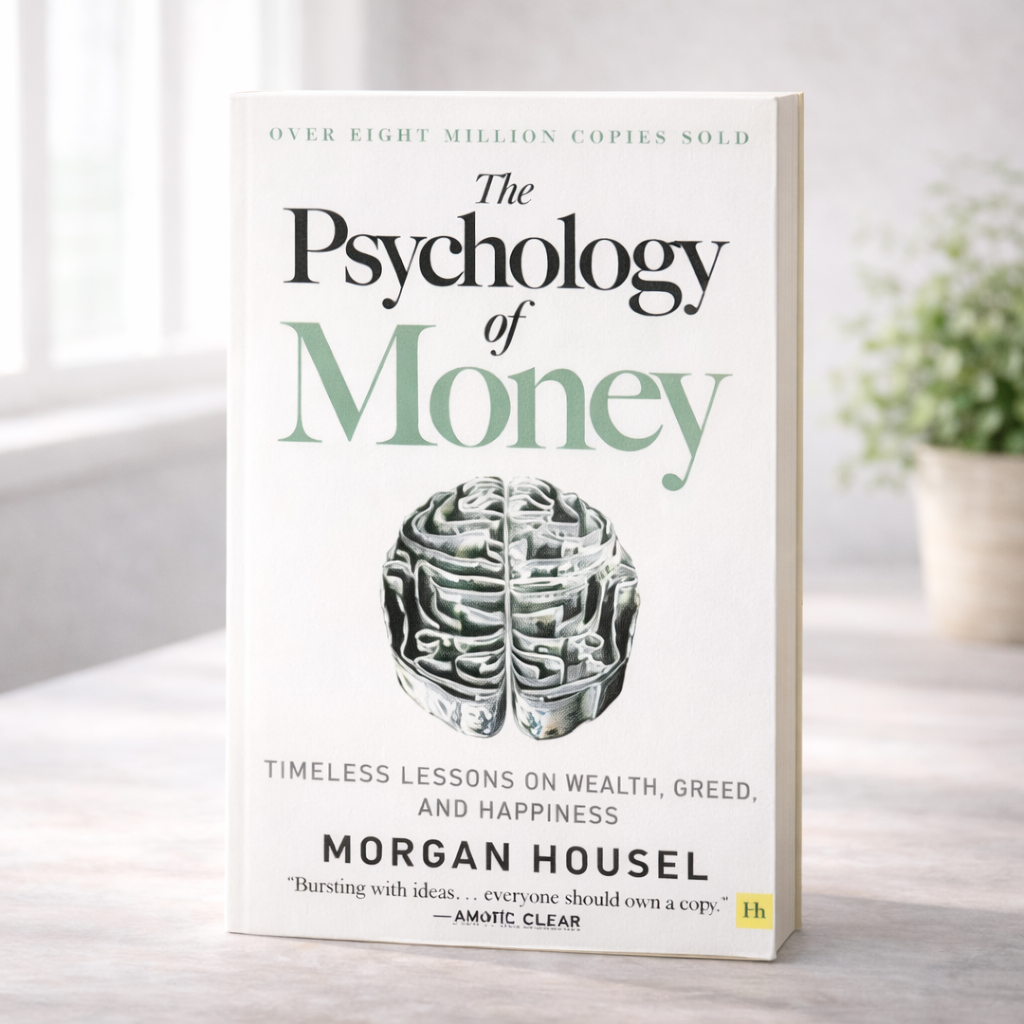
“The hardest financial skill is getting the goalpost to stop moving.” by Morgan Housel
Published in 2020, The Psychology of Money quickly established itself as a modern classic—not by introducing new financial theories, but by articulating truths many people recognized but couldn’t name. Its staying power comes from its realism: markets change, tools evolve, but human behavior remains remarkably consistent. In an era dominated by optimization and speed, the book endures by reminding readers that patience, humility, and emotional discipline often matter more than technical brilliance. Few contemporary finance books gain relevance by slowing people down rather than pushing them forward, and fewer still age well by telling the truth about how people actually behave.
Once behavior replaces appearance, another reality surfaces.
Knowing what to do does not guarantee doing it.
Even disciplined people make irrational decisions under pressure. Fear distorts timing. Ego amplifies risk. Comparison erodes patience. This is where many long-term plans quietly fail—not because they were wrong, but because emotions took control when clarity was needed most.
The Psychology of Money addresses this gap directly. Morgan Housel doesn’t focus on spreadsheets or strategies. He focuses on how people behave when money intersects with uncertainty, stress, and identity.
The book makes a simple but unsettling point: financial success is rarely about intelligence. It is about temperament. People don’t lose stability because they lack information; they lose it because emotions override judgment at the wrong moment.
Housel shows how patience often matters more than precision, and why long-term outcomes are shaped less by brilliant decisions than by avoiding catastrophic ones. Risk, he explains, looks different to everyone depending on experience—and misunderstanding that difference leads to conflict, regret, and poor timing.
The book doesn’t criticize emotion.
It teaches respect for it.
The Psychology of Money explains why even those who understand behavior still struggle to remain consistent. It reframes success as something fragile—not because systems are broken, but because human reactions are predictable.
Howard Marks Has publicly praised the book for its clarity around risk, psychology, and investor behavior.
Once emotion is understood, another reality emerges: willpower is unreliable. Even with clarity and emotional awareness, consistency breaks down when systems are missing. Good decisions shouldn’t depend on constant self-control. This is where implementation finally enters.
And our final title focuses on building structures that make the right behavior automatic—so progress continues even when motivation fades.
No Guilt. No Excuses. No B.S. Just a 6-Week Program that Works.
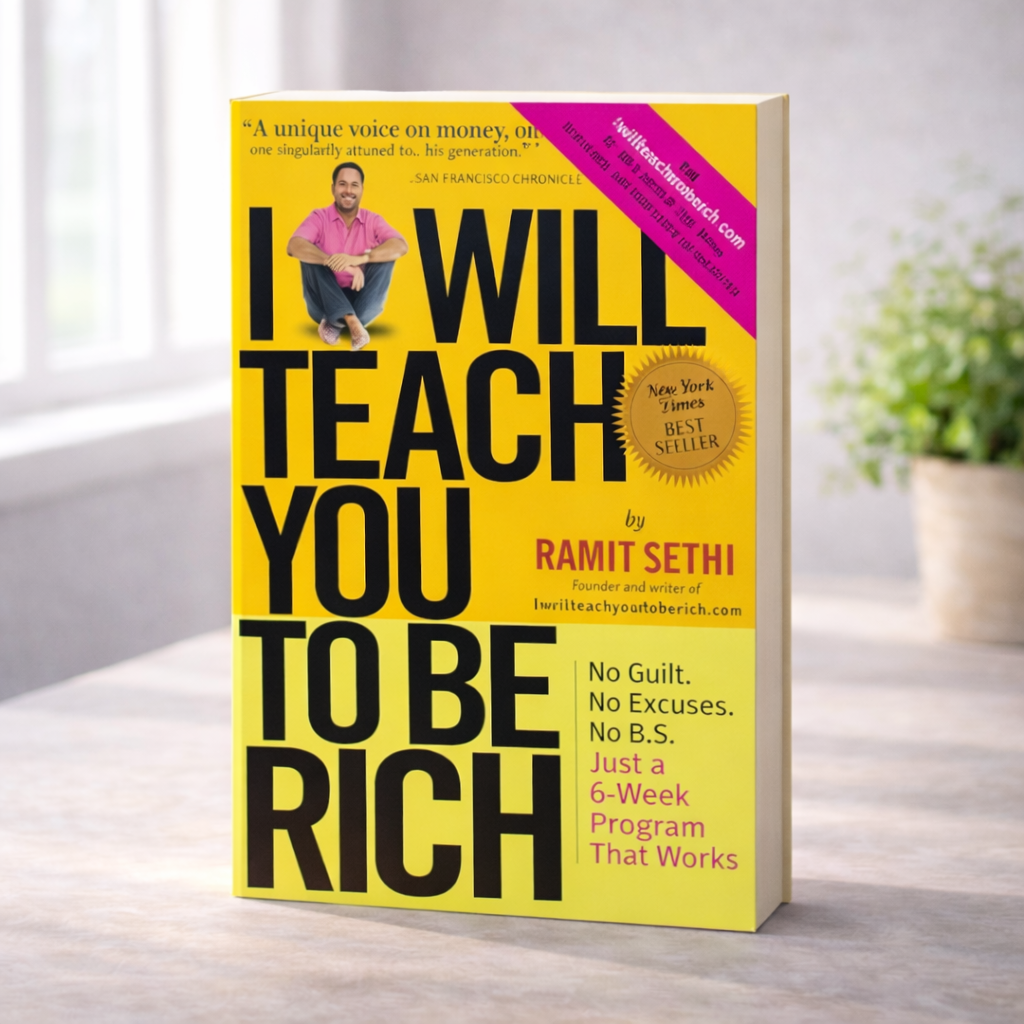
“Getting rich is not about working harder. It’s about making better decisions and letting them compound.” by Ramit Sethi
Published in 2009, I Will Teach You to Be Rich has remained relevant by resisting extremes. It avoids both austerity and excess, focusing instead on realistic systems that work within modern financial life. Its endurance comes from practicality—offering frameworks that adapt as income, goals, and priorities change. In a space often dominated by either guilt or bravado, the book stands out for its clarity, restraint, and respect for how people actually live. Few finance books age well by simplifying rather than intensifying, and fewer still succeed by making progress feel ordinary instead of heroic.
Once belief is corrected, responsibility accepted, behavior grounded, and emotion understood, a final constraint remains.
Willpower does not scale.
Even the most self-aware people struggle to stay consistent when every decision requires effort, attention, and restraint. Motivation fluctuates. Discipline fatigues. And progress stalls—not because clarity is missing, but because systems are.
I Will Teach You to Be Rich addresses this final layer directly. Ramit Sethi’s focus is not on mindset or theory, but on execution—how to turn clarity into action without relying on constant self-control.
The book reframes financial discipline as a design problem. Instead of asking people to make better decisions repeatedly, it asks how to make fewer decisions altogether. Automation, defaults, and structure replace intention and effort as the primary drivers of progress.
What this book adds to the sequence is relief.
Ramit Sethi shows that consistency improves when friction is removed. Saving, investing, and spending don’t require emotional intensity or deprivation—only alignment and systems that run quietly in the background. When money management stops demanding attention, people regain mental space for life itself.
The result isn’t rigidity.
It’s sustainability.
Placed here, I Will Teach You to Be Rich completes the arc. It doesn’t contradict the earlier books—it operationalizes them. Belief becomes structure. Responsibility becomes routine. And progress becomes something that continues even when motivation fades.
Tim Ferriss Has publicly praised Sethi’s systems-based approach to money and automation.
Taken together, these five books form a single progression rather than separate ideas. They move from awareness to responsibility, from behavior to emotional discipline, and finally to systems that make progress sustainable. None of them promise certainty. What they offer instead is clarity—the kind that reduces regret, improves decisions, and replaces reaction with intention. Financial stability, as these authors collectively show, is not the result of one breakthrough moment, but of aligning how we think, act, and plan over time. And once that alignment is in place, money stops feeling like something that happens to you—and starts becoming something you consciously direct.
“Money problems rarely come from lack of effort. They come from years of decisions made without clarity.”

— Vladimir V.R.