
Discover 5 truly life-changing books that go beyond inspiration and into practical stability—the kind that quietly improves your relationships, decision-making, finances, and emotional control.
These books help you build clarity under pressure, speak with intention, respond instead of react, and create the internal order required for long-term wealth, healthier family dynamics, and personal credibility. When emotional explosions decrease, conversations improve. When thinking becomes disciplined, better decisions follow and when purpose becomes clear; the habits, that once held you back turn into footprints in the sand—quietly erased, washed away by the tide of intention as you move forward.
This list isn’t about hype or temporary motivation. It’s about foundational upgrades—books that teach you how to regulate emotion, choose words carefully, think long-term, and align daily actions with who you’re becoming. The results compound: fewer regrets, stronger relationships, calmer authority, and a more stable path forward.
If you’re looking for comfort, this list may disappoint you.
If you’re looking for real change, it start here.
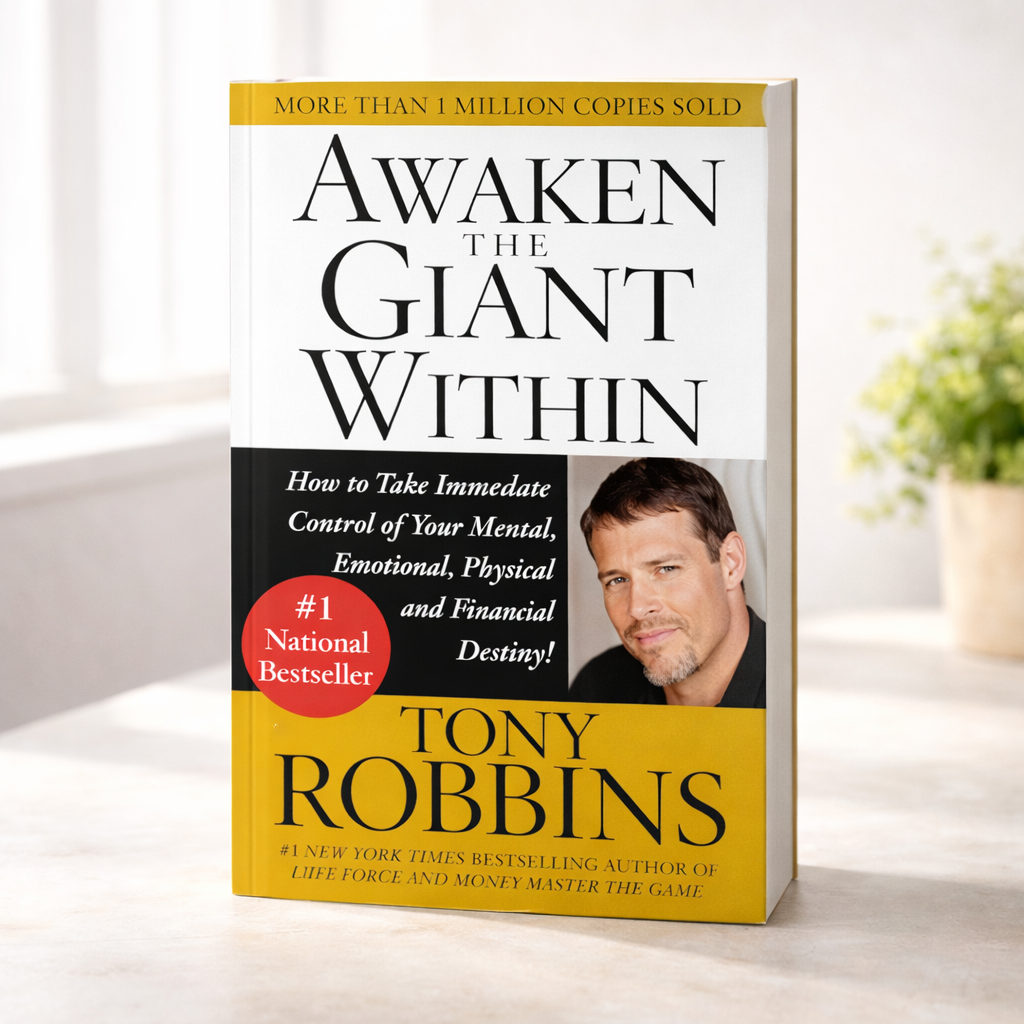
Some books enter your life as suggestions. Others arrive when you’ve already been living inside consequences.
“Awaken the Giant Within “ is not the kind of book you pick up out of curiosity. It’s the kind you find when life has already shown you what happens when momentum goes unchecked — when years are shaped by decisions that weren’t yours, by situations you didn’t choose, by paths that formed while you were simply trying to keep up.
For a long time, life can feel like that: as if you’re standing in front of a moving train, pushed forward without consent, carried by force rather than direction. You move, but you don’t steer. You progress through life, but you don’t decide.
This book speaks directly to that moment.
Tony Robbins doesn’t begin by asking who you want to become. He begins by asking who has been making your decisions so far — your past, your emotions, other people, or the standards you never consciously set. And once that question lands, it’s difficult to unsee how much of life runs on default.
What makes “Awaken the Giant Within“ different is that it doesn’t frame change as rebellion against the past, but as ownership of the future. It doesn’t ask you to rewrite what happened. It asks you to take responsibility for what happens next.
For me, this book marked the moment the train stopped.
Not all at once. Page by page, it changed my life and made it clear that control does not come from eliminating hardship, but from deciding how you respond to it. That authority begins internally — in how you define your standards, how you interpret events, and how you choose to act when no one is watching.
Tony Robbins writes with urgency, but also with structure. He treats emotional discipline as something learned, not inherited. He shows how unmanaged reactions quietly shape relationships, finances, and self-respect — and how clarity, once established, creates stability across every area of life.
What follows from that stability is not chaos or aggression, but calm authority. Conversations change. Decisions improve. Regret loses its grip and Life begins to feel less like something happening to you and more like something you are consciously choosing.
That is why this book has earned its reputation as a “bible” for those who want control — not over others, but over themselves. It has long served as a turning point: a shift from reaction to intention, from drifting to deciding, from surviving to directing, from sleeping to being awake.
“Awaken the Giant Within“ doesn’t promise comfort. It offers responsibility. And for those who have spent years feeling pushed forward by circumstances they never chose, responsibility is not a burden — it’s relief.
Because once you stop the train, you don’t go backward.
You choose a new path.
And for the first time, it’s yours.
“Your past does not equal your future.” — Tony Robbins
While some books confront you directly.
Others work more quietly — almost patiently — changing you not by force, but by repetition. “Atomic Habits“ belongs to the second kind.
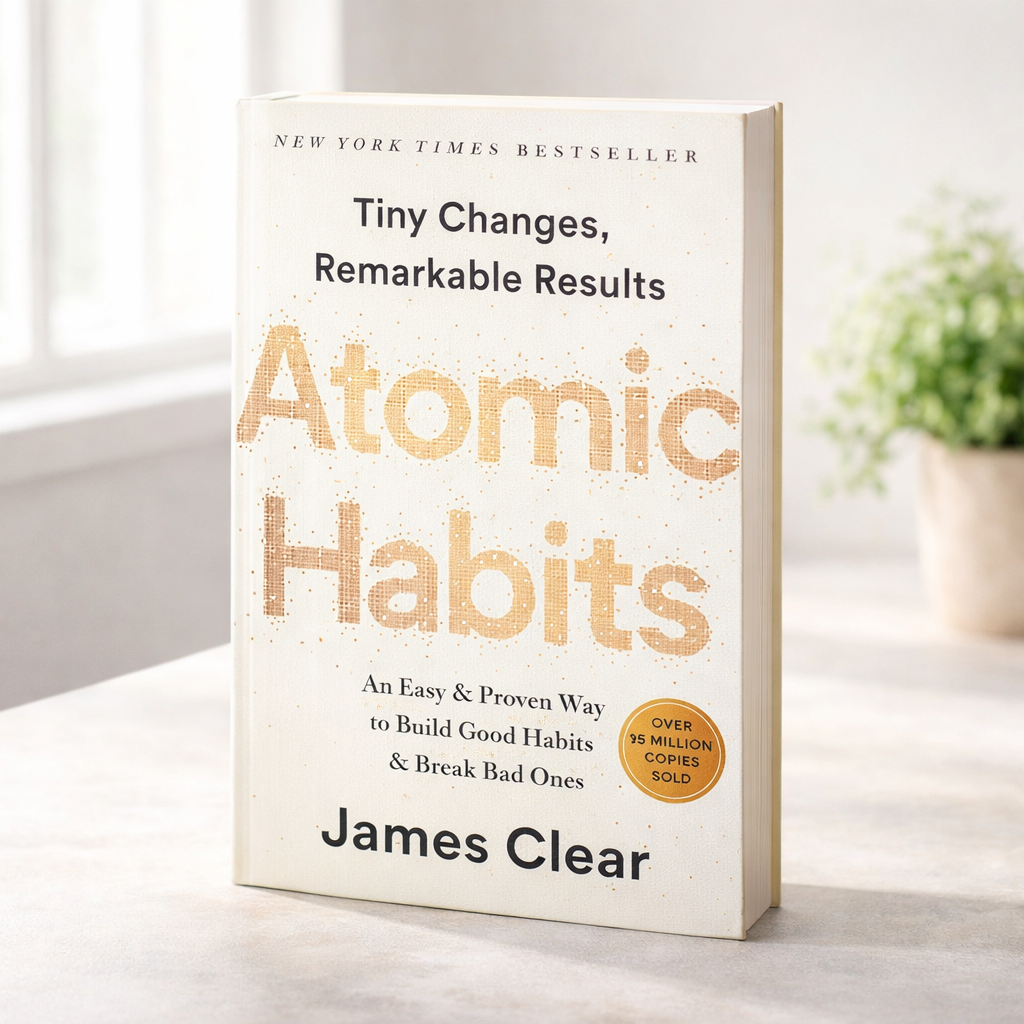
After learning to stop reacting to life, the next question becomes harder: how do you live consistently once you’re in control? Not for a week. Not for a surge of motivation. But across months and years, when no one is watching and nothing dramatic is happening.
This book met me at that point.
James Clear doesn’t write about transformation as an event. He writes about it as a process — one so small and ordinary that it’s easy to dismiss, and that’s precisely why it works. The book makes it clear that most lives don’t change because of grand decisions, but because of what gets repeated quietly, daily, almost invisibly.
Where “Awaken the Giant Within” helped me take responsibility for direction, “Atomic Habits“ helped me understand why direction alone isn’t enough. Change fails not because people don’t want it badly enough, but because their systems don’t support it.
James Clear shifts the focus away from outcomes and toward identity. Not who you want to be someday, but who you are becoming through your actions right now. The book doesn’t pressure you to do more — it asks you to become more precise. To notice what you repeat. To see how small behaviors accumulate into character, credibility, and eventually, a life that feels stable rather than fragile.
What makes “Atomic Habits“ powerful is its honesty. It doesn’t rely on emotion. It doesn’t demand discipline as an act of will. Instead, it shows how environment, routine, and self-image quietly shape behavior — whether you’re paying attention or not.
Reading it clarified something simple but uncomfortable: motivation fades, but structure stays. And when structure is aligned with who you want to be, progress becomes natural rather than forced.
Over time, the changes are subtle. Fewer promises broken to yourself. Less internal friction. More trust in your own follow-through. Life begins to feel less like something you keep restarting, and more like something you’re steadily building.
“Atomic Habits” doesn’t make you feel powerful in the moment.
It makes you reliable over time.
“You do not rise to the level of your goals. You fall to the level of your systems.” — James Clear
Some books help you improve your life.
This one explains why a life is worth carrying at all.
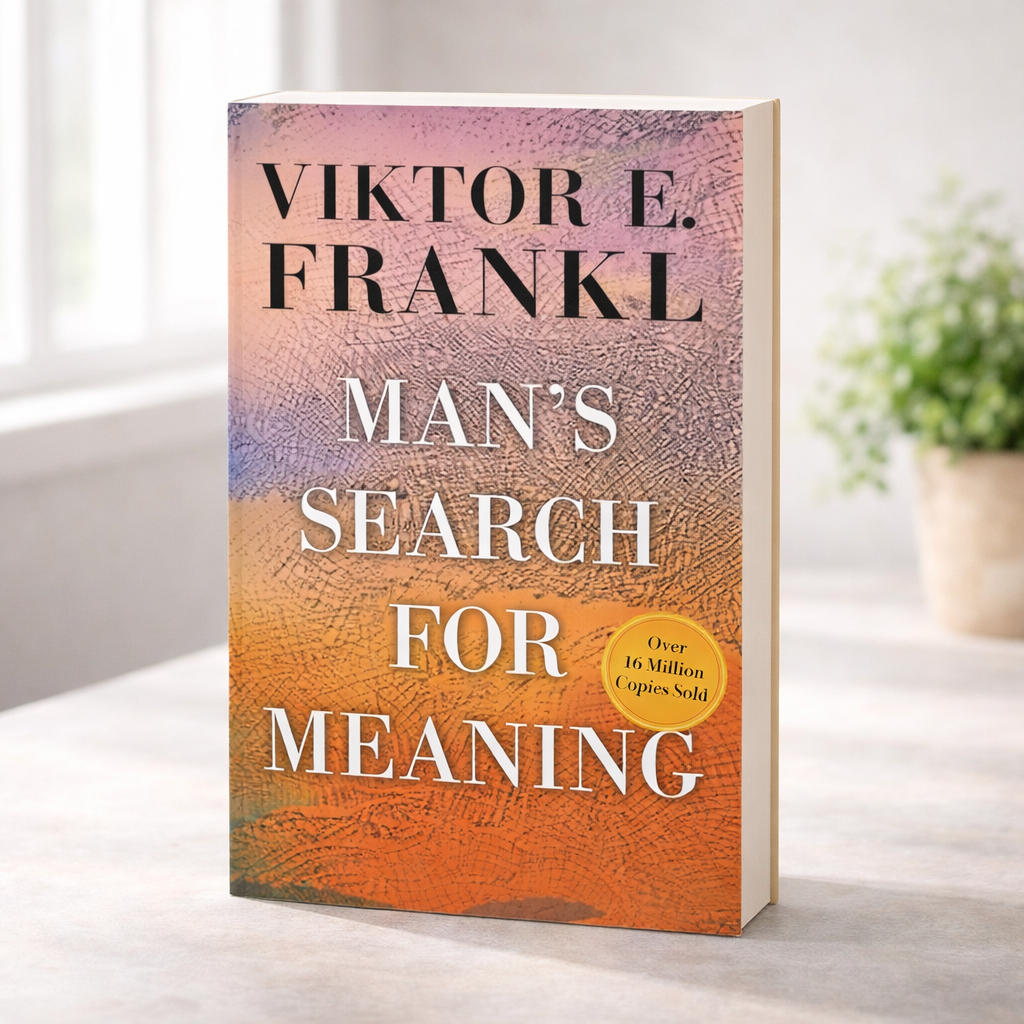
I didn’t come to Man’s Search for Meaning looking for answers. I came to it after realizing that control and discipline, while necessary, are not enough. You can structure your days, make better decisions, and still feel something missing — a quiet question underneath all the effort.
Viktor Frankl writes from a place where comfort is no longer theoretical. As a psychiatrist and a survivor of concentration camps, he does not speculate about suffering — he documents it. And what makes this book extraordinary is not what he endured, but what he observed: that even in the worst conditions imaginable, people who found meaning endured differently than those who did not.
This book doesn’t argue that suffering is good. It argues that suffering without meaning is unbearable.
Reading it reframed something essential for me. Until then, I had understood responsibility as control — control over choices, habits, direction. Frankl introduced a deeper layer: responsibility not just for your life, but to something beyond yourself. To values. To purpose. To a reason that justifies endurance when motivation disappears.
What makes Man’s Search for Meaning so unsettling — and so honest — is that it removes excuses without becoming cruel. Victor Frankl never says life is fair. He says life asks questions, and whether we answer them with dignity is up to us.
The book is quiet. There is no urgency, no persuasion. And that restraint is its strength. Frankl shows that meaning is not something you invent to feel better — it is something you discover through responsibility, through how you respond to pain, loss, and limitation.
For me, this book clarified why discipline matters in the first place. Why building habits, setting standards, and choosing direction are not empty exercises. They are how you live in alignment with something that gives weight to your days.
“Man’s Search for Meaning” doesn’t promise happiness.
It offers something more durable: reason.
“Those who have a ‘why’ to live can bear almost any ‘how.’” — Viktor Frankl
Breaking the Habit of Being Yourself
You can take responsibility for your life.
You can build better habits.
You can even find meaning in suffering.
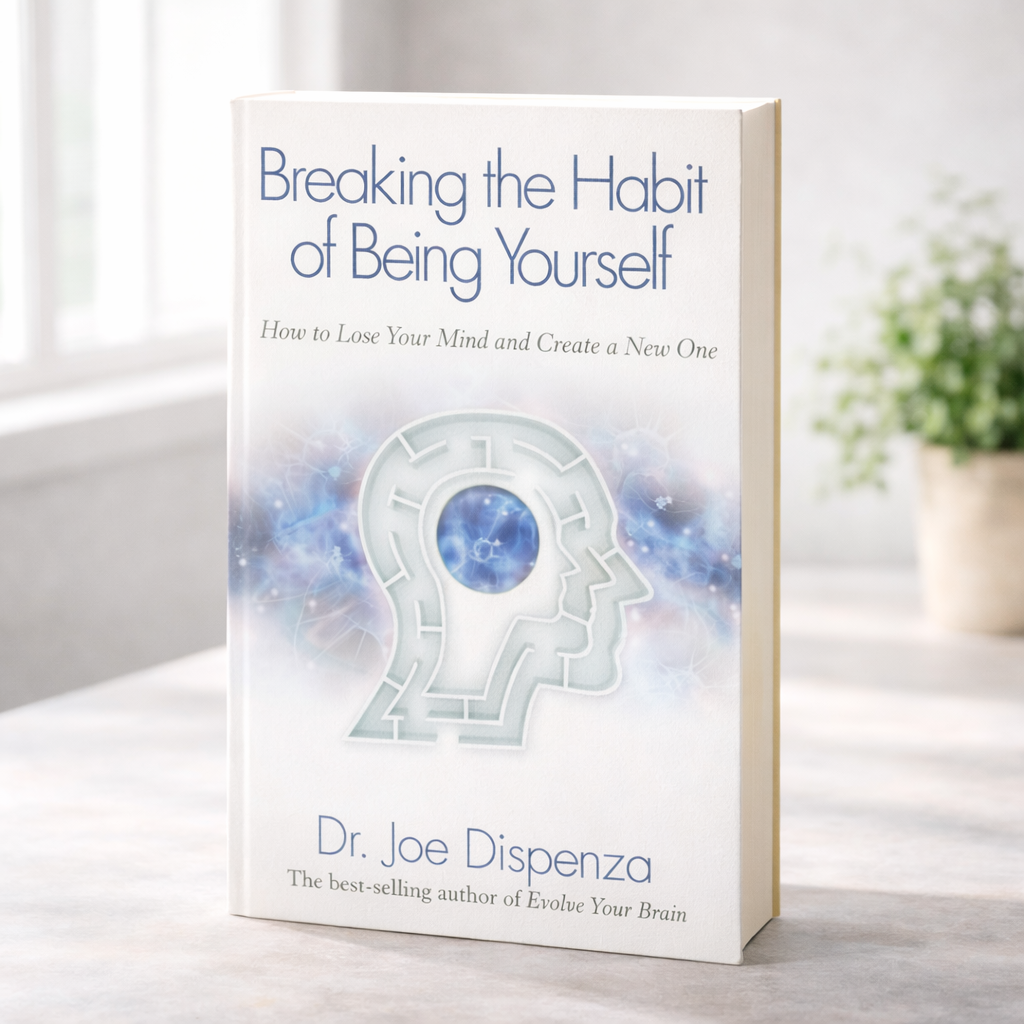
And still — something pulls you back. So why do we keep returning to the same internal state, even when we know better?
Old reactions. Familiar emotional states. Thought patterns that return before you notice them forming. It’s not a lack of effort. It’s something deeper. Something that Joe Dispenza was able to put in words, for those who are curious and want improovement.
This is where “Breaking the Habit of Being Yourself .” enters.
I didn’t approach this book looking for spirituality or escape. I came to it trying to understand why awareness doesn’t automatically lead to change — why insight can coexist with repetition, and why the mind often returns to what is familiar, even when it’s limiting.
Joe Dispenza doesn’t frame this as weakness. He frames it as conditioning.
The book explores how thoughts, emotions, and identity form loops — not metaphorically, but biologically and neurologically. How the body learns emotional states the same way it learns habits. And how, without awareness, we keep rehearsing the same inner life, day after day, calling it “who we are.”
What resonated most for me was the shift in responsibility this book introduces. Not responsibility for actions alone, but responsibility for internal states. For noticing when the mind returns to the past. For recognizing how emotion anchors identity. For understanding that change requires more than intention — it requires interruption.
This book doesn’t rush. It doesn’t demand belief. It invites observation.
Over time, it becomes clear that lasting change isn’t about forcing yourself into a new future, but about loosening your attachment to an old self. The one that reacts automatically. The one that feels familiar, even when it no longer serves you.
“Breaking the Habit of Being Yourself.” doesn’t promise transformation without effort. It shows why effort fails when awareness is absent. And why presence — practiced consistently — becomes the gateway to choice.
For me, this book deepened something the earlier ones introduced: that freedom isn’t just choosing better actions, but choosing who you return to internally when no one is watching.
Once that changes, behavior follows naturally.
“You can’t create a new future while holding on to the emotions of the past.” — Joe Dispenza
Lifespan: Why We Age—and Why We Don’t Have To
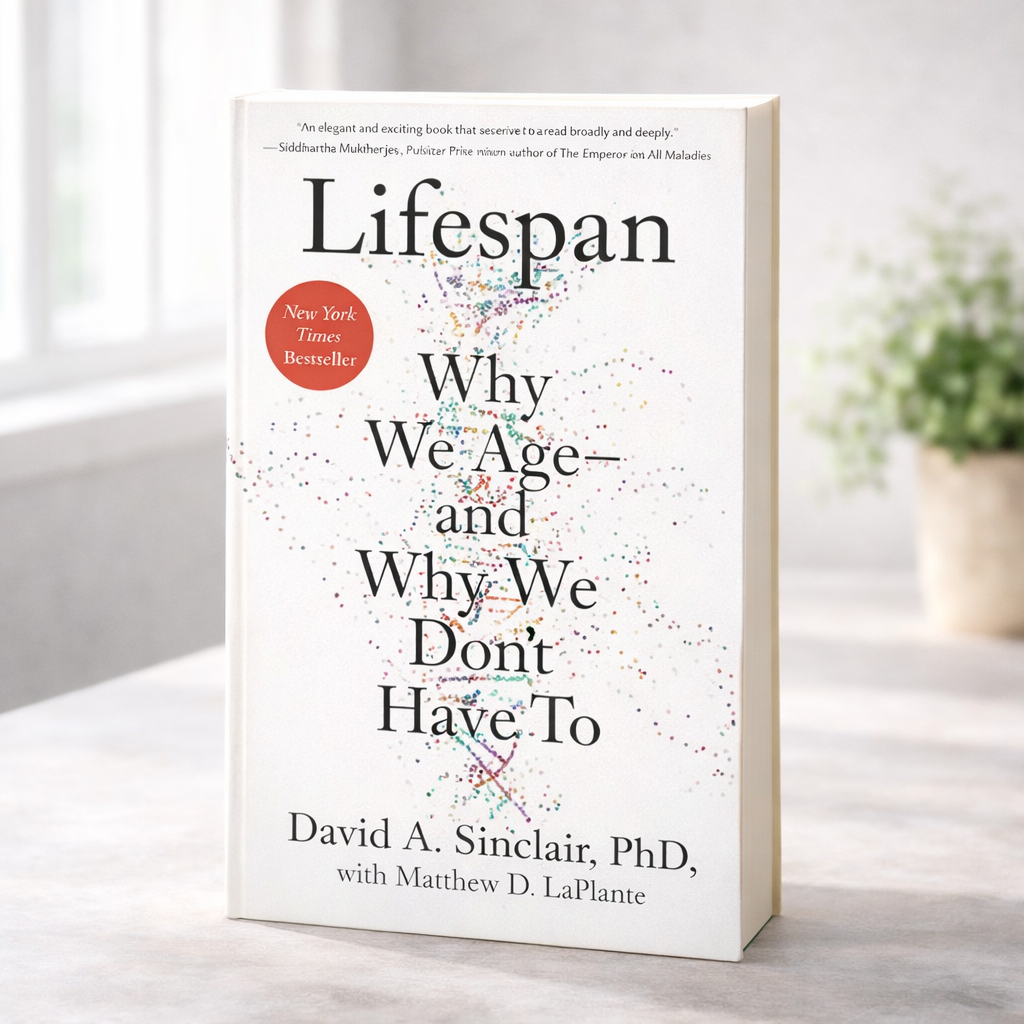
After control, consistency, meaning, and inner change, there’s one question that eventually becomes impossible to ignore:
How much time do we actually have to live the life we’re building?
“Lifespan“ doesn’t approach that question philosophically. It approaches it biologically.
I didn’t come to this book looking for reassurance about aging. I came to it with a growing awareness that discipline, purpose, and inner clarity only matter if the body holding them together remains functional, resilient, and alive long enough to carry them forward.
David Sinclair writes as a scientist, but the implications of his work are deeply personal. He challenges the idea that aging is simply something that happens to us — unavoidable, irreversible, and outside our influence. Instead, he presents aging as a process, one shaped by environment, behavior, and time. One we can control.
What struck me most was not the promise of living longer, but the responsibility implied by the science. If aging is not fixed, then neglect is no longer neutral. Every habit, every period of chronic stress, every ignored signal compounds quietly — just as positive behaviors do.
This book reframed longevity for me. Not as obsession with youth, but as respect for time. Time to think clearly. Time to make better decisions. Time to live in alignment with the values you’ve chosen rather than rushing through years on autopilot.
“Lifespan“ doesn’t encourage fear of aging. It encourages awareness. It connects the internal work of discipline and emotional regulation with the physical reality of cells, systems, and recovery. It shows that the body remembers how it’s treated — just as the mind does.
In the context of the books that came before it, “Lifespan“ feels grounding. Control without health is fragile. Meaning without energy is heavy. Habits without recovery break down. This book brings everything back to the one resource none of us can replace.
Time.
Not time measured only in years, but in quality — clarity instead of fog, strength instead of decline, presence instead of exhaustion.
David Sinclair doesn’t promise immortality.
He offers something more realistic, and more demanding: responsibility for how you age, just as you take responsibility for how you live.
And once you understand that, longevity stops being a future concern.
It becomes a daily habit.
“Aging is a disease — and that disease is treatable.” — David Sinclair
“Ever since I can remember, my life felt as if I had been placed in front of a train that pushed me through life without my control. My life was shaped by the decisions of others, by events I could not control, and by situations I did not choose. I moved forward, but I was not directing the movement.
Reading these books did not suddenly fix everything, and they did not mark an ending. If anything, they marked a beginning — an ongoing process of becoming more aware of how much of my life had been lived in reaction rather than intention. They helped me see where responsibility actually starts, even when circumstances remain difficult and the path forward is not yet clear.
I am still in this process. I am still learning how to slow down my responses, how to choose more deliberately, how to build stability instead of chasing relief. Some days are clearer than others. Some patterns loosen faster than others. But the direction has changed.
What has shifted is not perfection, but orientation. I am no longer only being carried forward by momentum. I am learning, step by step, how to place my feet where I choose. And even when the train hasn’t fully stopped, I now know that another path exists — one shaped by responsibility, patience, and intention.
That knowledge alone has changed how I move through my life. And it leaves room for anyone else who is still moving too.”
“inaction isn’t neutrality; it’s a quiet betrayal of yourself and the people who feel the consequences of your choices. Growth requires Courage.”

— Vladimir V.R